
Remote Used Car Inspection: AI Scan or Mechanic? Your Strategy Guide
Don't get burned on a remote car purchase. Learn a smart remote used car inspection strategy combining AI photo analysis for screening and a mechanic for validation.
AI-assisted research and drafting; factual sources are linked in the article.
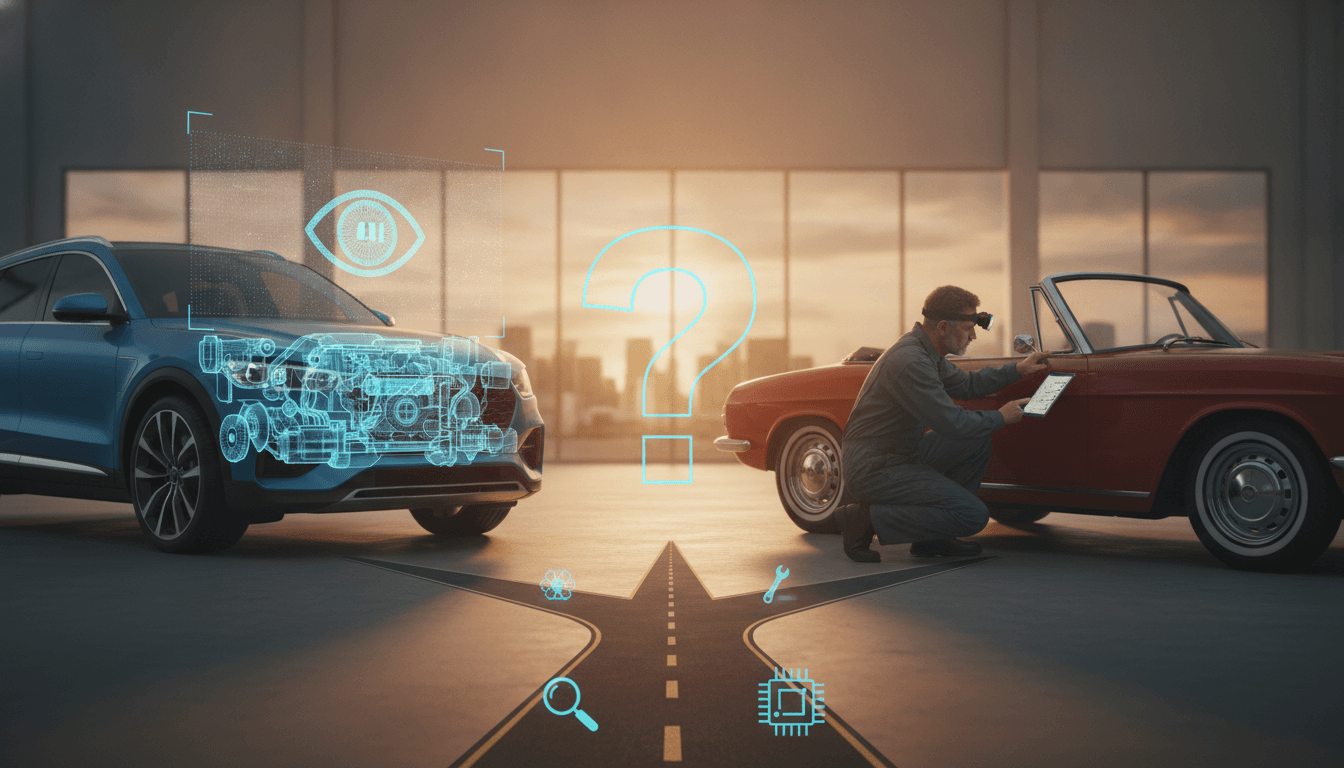
You found it. The perfect car. The right color, the right mileage, the right price. The photos look immaculate. There’s just one problem: it’s 200 miles away.
Your mind starts racing. Is it worth the six-hour round trip? Do you pay a local mechanic $200 for a pre-purchase inspection (PPI) on a car you’ve never seen? What if the photos are hiding something? What if you get there and the “immaculate” paint is covering up a shoddy collision repair?
This is the anxiety-inducing reality of buying a used car today. You're stuck, afraid of wasting hundreds of dollars and a full day on a dud, but also terrified of letting a great deal slip away. You need more than just information—you need a decision-making framework. You need a remote used car inspection strategy.
Let’s be blunt: a seller's photos are an advertisement, not an engineering report. They’re designed to make you fall in love. But love is blind, and it can’t see the mismatched paint texture on a repainted door or the subtle panel gap that signals a front-end collision. Before you invest your time and money, you need to screen for deception.
The Flaw in "Picture Perfect" Listings
Sellers aren't always malicious, but they are motivated. They’ll use flattering angles, good lighting, and a fresh wash to present their car in the best possible light. That’s just good salesmanship.
But this presentation masks critical information. Photos can't tell you about:
- The Smell: That sweet, sickening scent of a coolant leak from a failing water pump or the acrid smell of burning oil hitting a hot exhaust manifold.
- The Sound: A timing chain rattle on a cold start in a 2012 Ford F-150 3.5L EcoBoost (a potential $2,500 repair) is silent in a photo.
- The Feel: The subtle shudder from a failing torque converter in a Honda Odyssey or the clunk from worn-out suspension bushings over a speed bump.
Worse, photos can actively hide problems. A quick spray of tire shine can temporarily mask the tiny cracks of dry rot on a tire's sidewall. A slightly blurry photo of the driver's seat bolster can hide the torn leather that tells you the car's 60,000 miles were hard-lived.
This is where you need an objective, emotionless first line of defense.
Your First Line of Defense: The AI-Powered Gatekeeper
Before you get emotionally invested, before you even message the seller, you need to analyze the evidence you have: the photos. An AI photo analysis tool like CarScanAI is your secret weapon. Think of it not as a replacement for a mechanic, but as an expert gatekeeper who decides if a car is even worthy of a mechanic's time.
AI is purpose-built to see what human eyes—especially hopeful, excited human eyes—miss.
What AI Is Brilliant at Spotting:
- Hidden Bodywork: Your eyes see a shiny red door. An AI sees millions of pixels. It analyzes the reflection of light across every panel, detecting the subtle texture differences—often called "orange peel"—that are a dead giveaway of a repaint. It can measure panel gaps down to the millimeter, flagging inconsistencies that point to a collision.
- Listing Fraud: Scammers are lazy. They often use stock photos or steal pictures from other listings. AI can cross-reference images and instantly flag a listing that's using photos from a car sold six months ago in another state.
- Subtle Details & Red Flags: Is one headlight crystal clear while the other is yellow and faded? That suggests one was replaced, likely due to an accident. Are the tires mismatched brands? That can indicate a budget-conscious owner who may have cut corners on more important maintenance, too.
Case Study: The "Pristine" 2015 Honda CR-V
We recently analyzed a listing for a 2015 Honda CR-V with 75,000 miles, listed for $18,000—a fair price for a clean example. The photos were beautiful, taken on a sunny day. The owner claimed a clean history.
CarScanAI, however, flagged the front passenger fender. The light reflected differently, with a subtle texture variation inconsistent with the factory paint on the door next to it. It was a high-quality repair, but not a factory finish. This immediately told the potential buyer two things:
- The car had been in an accident, even if it wasn't on the vehicle history report.
- The seller wasn't being fully transparent.
The buyer used this information to look closer and found overspray on the inner fender liner. The car was no longer an $18,000 creampuff; it was a $14,000 car with a story. The AI scan saved them a wasted trip and a $4,000 overpayment.
When to Trust the AI Report and Walk Away
You’re busy. Your time is valuable. The goal of the AI scan is to help you kill bad leads fast. Here are the red flags from an AI report that should make you immediately close the tab and move on:
- Major Paintwork Detected: If the AI flags paintwork across multiple adjacent panels, or on structural areas like the A-pillars (next to the windshield) or quarter panels, walk away. This wasn't a parking lot scrape; this was a significant collision.
- VIN Mismatch: If the AI pulls the VIN from the windshield tag or door jamb sticker and it doesn't match the VIN in the listing text, it's either a scam or a seller with disqualifyingly bad attention to detail.
- Fraudulent Photos: If the report flags stock images or photos from other listings, don't even think about it. It’s a 100% scam.
An AI scan costs a few dollars. A wasted trip costs you half a day and a tank of gas. A PPI costs $200. A bad car costs you thousands. The math is simple.
The Green Light: When to Call in the Mechanic
So, the AI report comes back clean, or maybe it just flags a repainted bumper cover (very common and usually no big deal). The car has passed the initial screening. Now, and only now, is it time to bring in the human expert.
A Pre-Purchase Inspection (PPI) by a qualified mechanic is your validation step. This is where you confirm the car's mechanical and structural health. Here’s what a great mechanic does that AI can’t (yet):
- Get It On a Lift: This is the single most important part of any inspection. On a lift, a mechanic can spot frame rust, fluid leaks from the transmission seals or the infamous rear main seal (a $1,200+ job), and check for play in suspension components like ball joints and tie rods.
- The Diagnostic Scan: A seller can clear a check engine light just before you arrive. But a professional OBD-II scanner can see if the car's internal "readiness monitors" have been recently reset, a huge red flag. It can also pull manufacturer-specific codes that cheaper scanners miss.
- The Sensory Check: A mechanic will use their ears, hands, and even nose. They’ll listen for a faint whine from a failing power steering pump. They'll feel for a vibration that indicates a bad wheel bearing. They'll pop the oil cap and look for a dreaded "milkshake" (a mix of oil and coolant), the tell-tale sign of a blown head gasket—a repair that can easily cost $2,500-$4,000.
Your Actionable Remote Used Car Inspection Strategy
Let’s put it all together. Here is a clear decision-making framework based on the type of car you’re considering.
For Cars Under $8,000
- The Risk: A single major repair could be more than the car is worth. Think of a 2012 Nissan Sentra with a CVT transmission failure—a $4,000 repair on a $6,000 car.
- Your Strategy: An AI photo scan is non-negotiable. It's the cheapest insurance against buying a car with hidden, deal-breaking body damage. If the AI report is clean and the car is remote, you must still budget for a PPI. That $200 inspection is your best defense against buying someone else's ticking time bomb of a problem.
For Cars $8,000 - $20,000 (The Sweet Spot)
- The Risk: Hidden accident history that tanks resale value and potentially looming, expensive mileage-based repairs.
- Your Strategy: This is where the AI-then-mechanic combo is most powerful. Use AI to rapidly screen five different listings for Toyota RAV4s or Ford Escapes. When you find the one that's 150 miles away and has a clean AI report, then you book a mobile mechanic in that car's city. A $200 PPI that reveals a leaking head gasket on a 2013 Subaru Forester (a common issue around 120k miles) just saved you a $3,000 repair bill.
For Cars Over $20,000 (or Performance/European Cars)
- The Risk: Highly complex systems, astronomical repair costs, and massive value loss from improper service.
- Your Strategy: An AI scan is your first step to ensure the cosmetic and structural integrity is flawless. Then, a PPI is mandatory, but not from just any mechanic. You need a brand specialist. Buying a 2015 BMW 535i? Find a local independent BMW specialist. They’ll know to look for the specific, common oil leaks from the oil filter housing gasket and valve cover—repairs that can quickly add up to over $2,000 but a general mechanic might miss.
Your Next Logical Step
Stop scrolling through listings feeling helpless. You now have a proven remote used car inspection strategy that puts you in control. It's about using the right tool for the right job: leveraging powerful AI to screen out the junk from a distance, so you can wisely invest your time and money getting an expert mechanic to validate the true gems.
Before you schedule a test drive, before you plan a road trip, before you even bother messaging the seller—take 60 seconds. Run the listing's photos through an AI scan. It is the cheapest, fastest way to answer the most important question: "Is this car even worth my time?" For less than the cost of a coffee, you can eliminate the lemons and focus your energy on finding a genuinely great car.
Have a listing in mind?
Run a free first-pass check using the year, make, model, mileage, and asking price. No account required.
Check a Listing FreeRelated Articles
AI Detects Concealed Car Damage That Fools Expert Human Inspectors
Sellers are experts at hiding problems. Discover how AI detects masterfully concealed car damage, like frame repairs and paintwork, that your eyes will miss.
Hidden Damage: How AI Spots What Used Car Sellers Conceal in 2026
Sellers use expert tactics to hide issues. Learn how AI detection of hidden used car damage concealment in 2026 unmasks these costly secrets before you buy.
The Ultimate 2026 Guide to Remote Used Car Inspections: Verify Condition from Anywhere
Stop guessing. Our complete remote used car inspection guide 2026 helps you spot hidden damage and avoid costly mistakes from your couch, using AI and digital vetting.