
Hidden Damage: How AI Spots What Used Car Sellers Conceal in 2026
Sellers use expert tactics to hide issues. Learn how AI detection of hidden used car damage concealment in 2026 unmasks these costly secrets before you buy.
AI-assisted research and drafting; factual sources are linked in the article.

That “Too Good to Be True” Listing Is Staring You Down
You know the feeling. It’s 11 PM, you’re scrolling through listings for the tenth time this week, and then you see it. The perfect car. It’s the right color, has the right miles, and the price is just… chef’s kiss. The photos are glossy. The engine bay is so clean you could eat off it. The seller's description says “meticulously maintained.”
But a knot forms in your stomach. Is it real? Or are you about to drive 45 minutes across town to look at a polished-up lemon? You’re terrified of missing something—some tiny detail that ends up being a $3,000 mistake.
Let me tell you something a lot of people don't want to admit: sometimes, it’s not just about a seller being unaware of a problem. Some sellers are actively, and skillfully, hiding them. They aren't just washing the car; they're performing a magic show, and you're the audience they hope to fool. They know exactly what buyers look for, so they focus on hiding problems where most people never think to check.
The Seller’s Playbook: More Than Just a Car Wash
Having inspected hundreds of cars, I’ve seen the tricks. They go way beyond a simple coat of wax. These are calculated tactics designed to mask serious, expensive problems long enough for the cash to hit their bank account.
The "Detailer's Special": Cosmetic Concealment
A clean car is good, but a surgically clean car is a yellow flag. A favorite trick is to power wash and degrease the engine bay. It looks impressive, but experienced inspectors know this is often done to wash away evidence of slow oil or coolant leaks. A 10-year-old car with 120,000 miles should have a little dust on the engine. A spotless one suggests someone might be scrubbing away the evidence.
They also use thick, greasy tire shine to draw your eye away from curb-rashed wheels or cheap, mismatched tires. They’ll use heavy-scented air fresheners to mask the smell of mildew from a water leak or the acrid scent of a potential electrical issue.
The Sound of Silence: Masking Mechanical Gremlins
This is one of the most devious tactics. A seller can pour a bottle of thick oil additive, like Lucas Oil Stabilizer, into the engine right before you arrive. That knocking sound from a worn-out engine? Gone. That whine from a failing transmission? Magically quiet.
For a little while, at least. The effect wears off after a few hundred miles or with the next oil change, leaving you with the bill. A notorious example is the timing chain rattle on 2011-2014 Ford F-150s with the 3.5L EcoBoost engine. It's a well-known issue that can cost over $2,500 to repair. A thick additive can quiet that startup rattle just long enough to make the sale, turning your dream truck into a financial nightmare.
The "Rust Belt Refresh": Hiding a Corroded Cancer
This is the big one, especially for trucks and SUVs. A seller will take a vehicle with a dangerously rusted frame, buy a few $15 cans of black rubberized undercoating, and spray over everything. To the untrained eye, the undercarriage looks clean and protected.
In reality, that fresh coating is trapping moisture against the metal, accelerating the rot. They're hiding crumbling frame rails and rusted-out suspension mounts. We saw this on a 2010 Toyota Tacoma recently. The owner had sprayed over a section of the frame known for severe rust (an issue that prompted a massive recall). A buyer could have easily missed this, purchasing a truck that was not only worth thousands less but was also structurally unsafe to drive. A proper frame repair, if even possible, can exceed $5,000.
Why Your Eyes (and Even Your Mechanic) Can Be Fooled
It’s not your fault. You’re not a machine. When you're at the car, you're under pressure. The seller is watching you. You’re trying to remember everything you read online, listen to the engine, check the tires, and process everything at once.
This is called “inspection fatigue,” and it’s real. Even a professional pre-purchase inspection (PPI) can miss these concealment tactics. A mechanic will check the brakes, look for leaks, and scan for codes. They’re looking for existing functional failures. They aren’t necessarily forensic analysts looking for signs of a cover-up. Most won't pull out a paint depth gauge unless they have a strong reason to suspect a repaint, and a good blend job is hard to spot.
You need a tool that sees what the human eye glosses over. You need something that isn’t fooled by shiny surfaces or fresh paint.
The AI Advantage: Seeing the Unseen Evidence
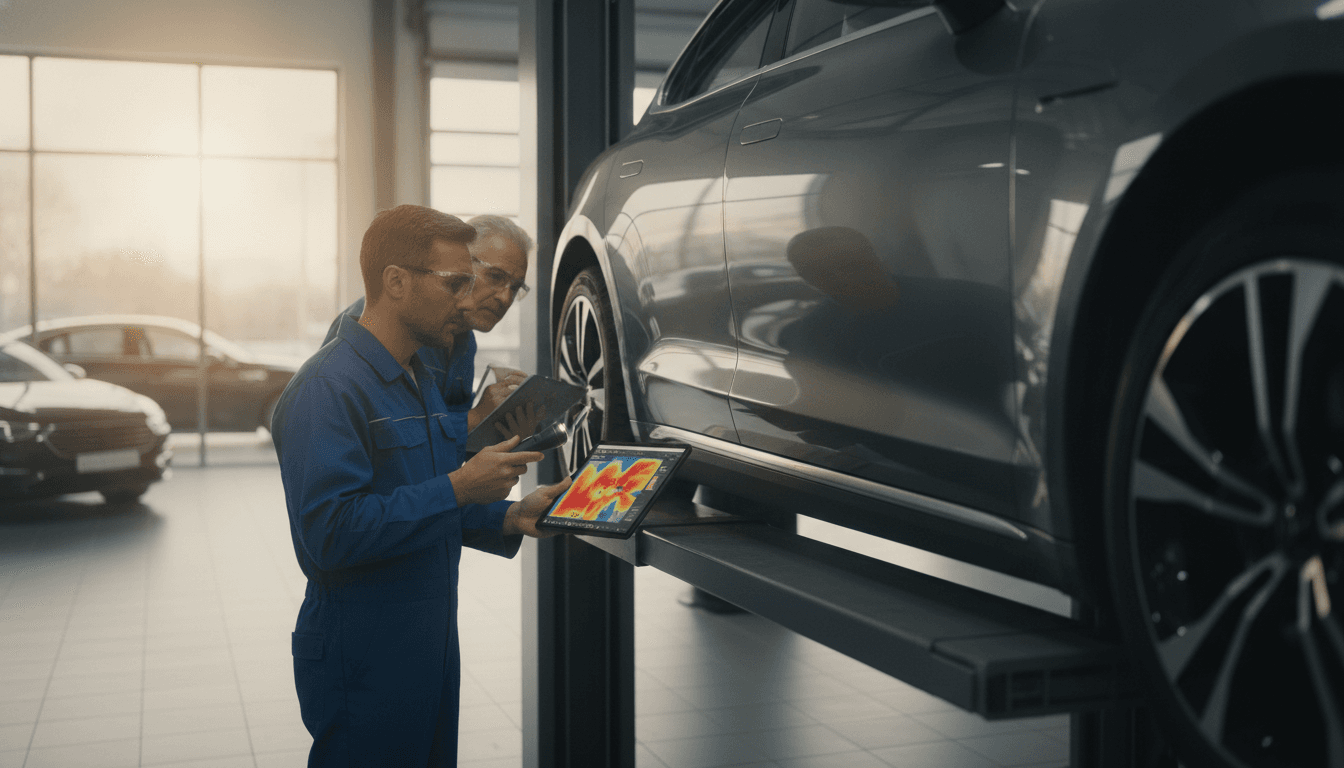
This is where the game changes. By analyzing the photos in a listing before you even see the car, AI can flag the subtle evidence of these deceptions. It’s trained on millions of vehicle images—clean ones, damaged ones, and repaired ones—to spot inconsistencies we would never notice.
Detecting Mismatched Paint and “Orange Peel”
When a car is repainted at a body shop, it’s nearly impossible to perfectly replicate the factory finish. The new paint often has a slightly bumpy texture, like the skin of an orange, which pros call “orange peel.” AI algorithms can detect these microscopic variations in how light reflects off a body panel, flagging a fender or door that doesn't match the rest of the car.
Case Study: We recently analyzed a 2016 Subaru Forester listing. The photos were beautiful, but the AI flagged an 0.8% difference in the reflection pattern on the passenger rear door. It was invisible to the naked eye. The buyer, now suspicious, took a paint depth gauge to the inspection and confirmed the door had twice the paint thickness of the factory panels. The CarFax was clean, but the car had clearly sustained unreported damage. This information saved the buyer from overpaying by at least $3,000 and unknowingly buying a car with a compromised unibody.
Analyzing Panel Gaps with Sub-Millimeter Precision
After a collision, it's incredibly difficult to get body panels to line up with perfect factory precision. A human might spot a big, ugly gap, but AI can measure the gaps between the hood, fenders, and doors down to the pixel. It compares these measurements to the factory specifications for that exact make and model, flagging inconsistencies that point to a previous accident and repair.
Unmasking the Undercoat and Spotting Hidden Rust
This is where the future of AI detection of hidden used car damage concealment 2026 is truly powerful. AI can analyze the texture and uniformity of a vehicle's undercarriage from photos. Factory coatings are applied evenly by robots. A cover-up spray job is often splotchy, with tell-tale overspray on exhaust pipes, brake lines, or suspension components. The AI flags these areas of inconsistent texture, pointing a giant red arrow at where a seller might be hiding rust or shoddy frame repairs.
The Real-World Cost of a “Good Deal”
Let’s translate these hidden issues into actual dollars you could lose:
- Hidden Repaint: Even with a good repair, an accident history reduces a car’s value. According to NADA guides, this diminished value can be anywhere from 10-25%. On a $20,000 vehicle, that’s a $2,000-$5,000 overpayment right off the bat.
- Masked Engine Noise: That quieted-down engine could be hiding a known oil consumption issue, like the one found in 2007-2011 Toyota Camrys with the 2.4L engine after 100k miles. That’s a potential $3,000 engine repair bill waiting for you after your first oil change.
- Concealed Transmission Issues: A seller masking a failing CVT transmission on a 2014 Nissan Rogue is hiding a $4,000-$5,000 replacement job that commonly rears its head around 80,000-100,000 miles.
- Covered-Up Frame Rust: This is the worst-case scenario. The vehicle could be deemed structurally unsafe, unable to pass a safety inspection, and essentially worthless. You lose the entire purchase price.
Sophisticated AI detection of hidden used car damage concealment 2026 isn't just a fancy feature; it's your financial shield against these devastating outcomes.
Your First Line of Defense
The used car market is more complex than ever. Sellers have more tools at their disposal to hide problems, but now, buyers do too. You don't have to walk into every viewing feeling anxious and outmatched.
Before you waste your gas, your time, and your emotional energy going to see a car that looks perfect online, take 60 seconds. A CarScanAI report can analyze the listing photos and give you the upper hand, pointing out the subtle clues of a cover-up that sellers are betting you won't see.
Found a listing that looks almost too clean? For less than the price of a coffee, you can run an AI check on the photos. It’s the smartest, cheapest, and fastest step you can take to avoid a multi-thousand-dollar mistake.
Have a listing in mind?
Run a free first-pass check using the year, make, model, mileage, and asking price. No account required.
Check a Listing FreeRelated Articles
AI Detects Concealed Car Damage That Fools Expert Human Inspectors
Sellers are experts at hiding problems. Discover how AI detects masterfully concealed car damage, like frame repairs and paintwork, that your eyes will miss.

Remote Used Car Inspection: AI Scan or Mechanic? Your Strategy Guide
Don't get burned on a remote car purchase. Learn a smart remote used car inspection strategy combining AI photo analysis for screening and a mechanic for validation.

The Silent Killers: 7 Hidden Used Car Problems Even Savvy Buyers Overlook (and How to Spot Them)
Don't get burned. We expose 7 hidden used car problems overlooked in a typical inspection that cost thousands. Learn to spot red flags before you buy.