
The Ultimate 2026 Guide to Remote Used Car Inspections: Verify Condition from Anywhere
Stop guessing. Our complete remote used car inspection guide 2026 helps you spot hidden damage and avoid costly mistakes from your couch, using AI and digital vetting.
AI-assisted research and drafting; factual sources are linked in the article.

You Found the Perfect Car. It's 300 Miles Away. Now What?
You’ve spent weeks scrolling through listings. Your eyes are blurry, but you finally see it: the right color, the right mileage, the right price. The photos look pristine. There’s just one problem—it’s a four-hour drive away.
The anxiety kicks in. What if the photos are hiding something? What if that tiny glare on the fender is actually a massive dent? Is this trip going to be a colossal waste of time and money, or did you just find your next car?
You're stuck. You're afraid of missing out on a great deal, but you're terrified of getting ripped off by a car with a hidden, $3,000 problem. This feeling is exactly why we've created this remote used car inspection guide 2026—to move you from anxious guesswork to confident decision-making, all from your keyboard.
The Digital Smoke and Mirrors: Why Listings Lie
Sellers aren't always malicious, but they are motivated. They take photos in the golden hour light, use filters, and conveniently angle the camera away from the bumper scuff or the curb-rashed wheel. They're presenting the car's best self. Your job is to find its true self.
Traditional advice tells you to get a vehicle history report and call it a day. That's no longer enough. Our internal data at CarScanAI suggests that up to 40% of private seller listings show visual evidence of prior bodywork that is never mentioned on a CarFax or AutoCheck report. An accident that was paid for out-of-pocket leaves no paper trail, but it leaves physical evidence—evidence you can spot remotely if you know what to look for.
The First Filter: Is This Listing Even Worth Your Time?
Before you analyze a single photo, analyze the listing itself. Scammers and lazy sellers leave clues.
- Vague Descriptions: Phrases like "runs great," "AC is cold," and "needs nothing" are red flags. A real owner can tell you they just replaced the alternator or had the oil changed 1,500 miles ago.
- Stock Photos or Screenshots: A massive, unmissable red flag. If they can't be bothered to take real pictures of the car they're selling, close the tab and move on.
- Price is Too Low: A 2018 Honda CR-V EX-L listed for $15,000 when market value is $22,000 isn't a good deal; it's a trap. It likely has a branded title (salvage, flood) or a major mechanical issue the seller is desperate to offload.
If the listing passes this initial sniff test, it's time to become a digital detective.
Level 1 Vetting: Decoding the Photos Like a Pro
This is where you can catch 80% of the issues without leaving your chair. You need to look at the photos, then look through them.
Your Eyes vs. The AI: A Powerful Combination
Start by looking for the obvious things, then use technology to find the subtle ones.
- Look for Inconsistency: Do all four tires match? Mismatched, cheap tires (like a mix of Primewell and LingLong) suggest the owner cut corners on maintenance. Are the headlights crystal clear but the taillights foggy? The headlights might have been replaced after a front-end collision.
- Hunt for Reflections: Look at the reflections in the body panels. A clean reflection should be straight and unbroken. If the lines of a reflected tree or power line get wavy or distorted, you're looking at a dent or previous body filler (Bondo) work.
- Check the Gaps: The spaces between the hood and fenders, the trunk and quarter panels, should be tight and even. You shouldn't be able to fit a pinky finger in one side of the hood gap and not the other. Uneven gaps are a classic sign of a shoddy collision repair.
This is where human eyes hit their limit. A slight difference in paint texture or a 2mm difference in a panel gap is nearly impossible to spot on a compressed website photo. This is the gap where expensive mistakes happen.
Case Study: The "Pristine" 2017 Audi A4
We recently analyzed a listing for an A4 that looked perfect. Clean CarFax, seller claimed it was garage-kept. Our AI, however, flagged two things:
- An "orange peel" texture on the driver's side front fender, while the driver's door was smooth as glass. This indicates the fender was repainted.
- A slight color mismatch on the front bumper cover, only visible under specific lighting analysis.
The buyer, armed with this info, asked the seller, "Was the front driver's side ever painted?" The seller admitted to a "small parking lot incident" that wasn't on the report. This "small incident" could easily hide a compromised headlight assembly ($1,200+) or sensor damage. The AI check turned a potential disaster into a negotiation point.
Level 2 Vetting: The Digital Paper Trail Beyond CarFax
A clean CarFax is a good start, but it's not a guarantee of a good car. It only reports what's been reported to it.
Digging for Model-Specific Time Bombs
This is the single most important step you can take. Every car has a weakness. Your job is to know what it is before you buy.
- Thinking about a 2012-2016 Ford Focus? You need to know about the DPS6 dual-clutch transmission. A slight shudder between 1st and 2nd gear isn't a "quirk"; it's a sign of a failing clutch pack that can cost over $2,500 to repair.
- Looking at a 2010 BMW 328i? Ask the seller if the electric water pump and thermostat have been replaced. It's a known failure point around 80,000 miles, and it's a $1,300 job that will leave you stranded.
- Found a great deal on a 2008 Toyota Camry with the 2.4L engine? That engine (the 2AZ-FE) is notorious for excessive oil consumption after 100k miles due to bad piston rings. The fix? A new engine, costing $3,000-$4,000.
How do you find this information? Simple. Google "[Year Model] common problems" (e.g., "2014 Chevy Cruze common problems") and read the owner forums. Real owners will tell you exactly what to look for and at what mileage it fails.
Don't Forget Government Recalls
Check the car's VIN for free on the National Highway Traffic Safety Administration (NHTSA) website. The Takata airbag recall was one of the largest in history, affecting over 67 million vehicles. An open recall for a faulty airbag is a serious safety issue you need to know about.
The Final Decision: Should You Make the Trip?
You've done the work. You've analyzed the listing, dissected the photos, and researched the car's dirty little secrets. Now, you can make an informed decision. Following a thorough remote used car inspection process is how you avoid wasting a Saturday and a tank of gas.
Ask yourself these questions:
- Did the listing photos pass a detailed manual and AI-powered review?
- Is the vehicle history report clean, AND are there no major open recalls on the NHTSA site?
- Have I researched the top 2-3 common expensive failures for this specific year and model, and am I prepared for that risk?
- Have I spoken to the seller on the phone and gotten clear, confident answers to my questions?
If the answer to all of these is "yes," you can be reasonably confident that the car is worth seeing in person. You haven't eliminated all risk, but you've retired the most obvious and costly deal-breakers.
You've turned a 300-mile gamble into a calculated business decision. With this remote used car inspection guide 2026, you're not just a buyer anymore; you're an informed investor in your own transportation.
The Next Logical Step
You wouldn't drive 300 miles to a first date without looking at their picture first. Don't do it for a $15,000 car.
Before you message the seller, before you imagine the road trips, take 60 seconds. Run the listing's photos through CarScanAI's Quick Check. For less than the cost of a gallon of gas, you can get an instant, unbiased second opinion that spots the paintwork, panel gaps, and hidden issues your eyes might miss. It's the cheapest trip insurance you'll ever buy.
Have a listing in mind?
Run a free first-pass check using the year, make, model, mileage, and asking price. No account required.
Check a Listing FreeRelated Articles
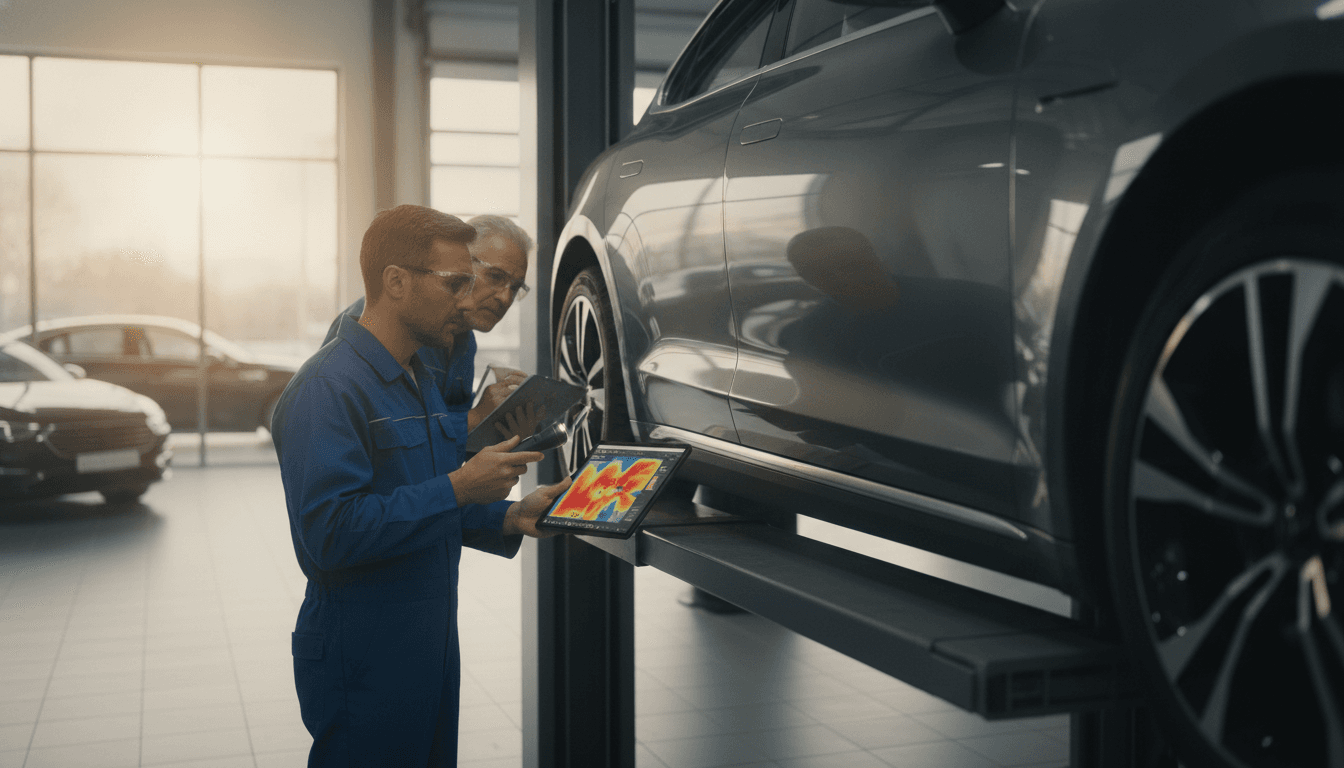
AI Detects Concealed Car Damage That Fools Expert Human Inspectors
Sellers are experts at hiding problems. Discover how AI detects masterfully concealed car damage, like frame repairs and paintwork, that your eyes will miss.

Remote Used Car Inspection: AI Scan or Mechanic? Your Strategy Guide
Don't get burned on a remote car purchase. Learn a smart remote used car inspection strategy combining AI photo analysis for screening and a mechanic for validation.
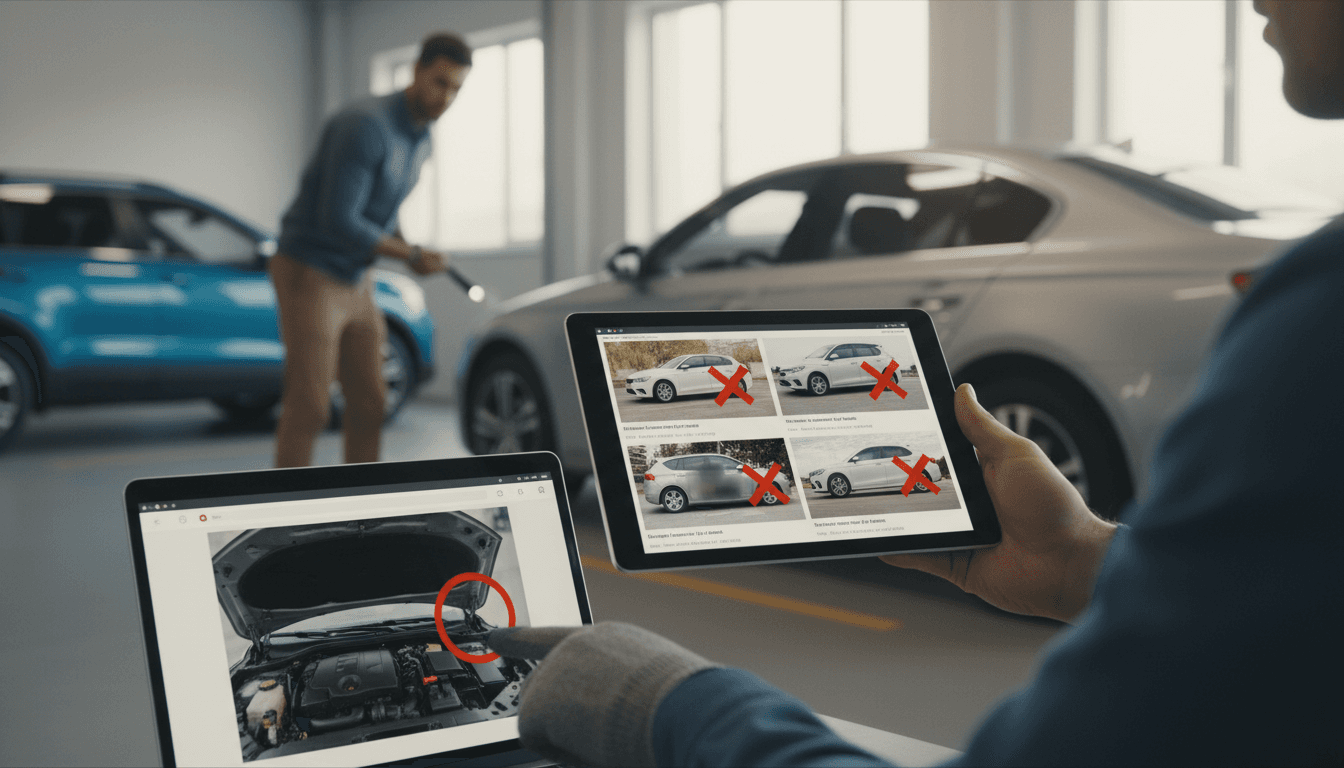
The Ultimate 2026 Guide: Spotting Used Car Red Flags in Online Photos
Don't get scammed. Learn how to spot used car red flags in online photos in 2026 with our expert guide to paint, panel gaps, and engine bay secrets.