
Used Car Problems Even Mechanics Miss in 2026 (And How to Spot Them)
In the 2026 used car market, a standard PPI isn't enough. Discover the hidden used car problems even mechanics miss and learn how to avoid a costly mistake.
AI-assisted research and drafting; factual sources are linked in the article.
You’ve been scrolling for weeks. Marketplace, AutoTrader, Craigslist—they’re all a blur of silver sedans and black SUVs. Then you see it. The right car, the right mileage, and the price… it’s perfect. The photos are crisp, the interior looks spotless, and the seller seems nice.
A voice in your head whispers, “Is this too good to be true?”
You know the standard advice: get a vehicle history report and have a trusted mechanic do a pre-purchase inspection (PPI). For decades, that was the gold standard. But I’m telling you now, in 2026, it’s dangerously incomplete. The game has changed. Sellers are smarter, repairs are harder to spot, and there’s a new class of costly issues that sail right past even a seasoned mechanic’s inspection.
You’re not just worried about buying a lemon. You’re worried about making a $5,000, $10,000, or even $15,000 mistake that you’ll be paying for over the next five years. Let's talk about the traps nobody is warning you about.
The Game Has Changed: Why Your Mechanic's Eyes Aren't Enough Anymore
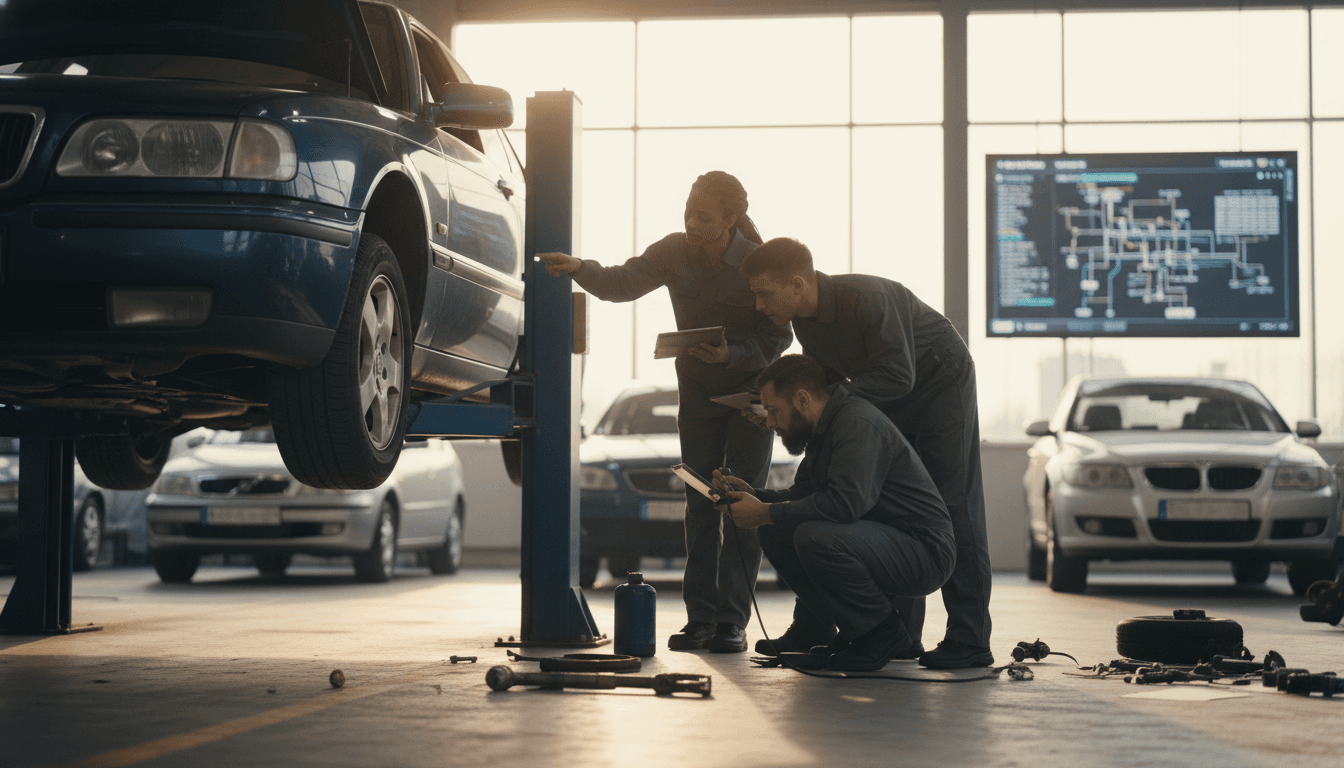
Think of a pre-purchase inspection. A mechanic puts the car on a lift, pulls the wheels, checks for leaks, plugs in a basic code reader, and gives it a test drive. They’re looking for worn brakes, cracked belts, and obvious frame damage. They are incredibly valuable for spotting mechanical wear and tear.
What they often miss, however, are the signs of sophisticated deception. Repair technology and scam artistry have evolved, while the basic PPI has largely stayed the same.
-
Cosmetic Concealment is an Art Form: Ten years ago, a repaint was easy to spot. You’d see mismatched paint, overspray on the trim, or thick body filler (a “bondo-bucket”). Today, body shops can blend paint so flawlessly that it’s nearly undetectable without a paint depth gauge—a tool most mechanics don’t use on a standard PPI. They can replace an entire front clip with OEM-looking parts from a donor car, leaving behind no trouble codes and only the faintest clues.
-
Digital Deception is Rampant: A “clean CarFax” has become a marketing slogan, not a guarantee. It only shows what’s been reported. We recently analyzed a 2022 Subaru Outback listing where the history report was spotless. But a quick AI scan of the photos flagged that the front bumper, grille, and headlights were from a 2023 model. The owner likely hit a deer, paid a local shop cash to avoid an insurance claim, and “upgraded” the front end. The CarFax was clean, but the car had a history, and its resale value was instantly $3,000 less than the asking price.
-
The Meticulously Cleaned Catastrophe: Flood cars used to be easy to spot—they smelled like a swamp and had silt in the glovebox. Not anymore. Professional disaster restoration companies can now buy flooded vehicles at auction, perform a multi-thousand-dollar cleaning and ozone treatment, and ship them a thousand miles away to a state with lax title laws. The title gets “washed” clean. A mechanic might not spot the faint watermark high up behind the dashboard insulation during a one-hour inspection, but the corrosion has already started on the wiring harnesses for the airbags and ECU.
The $5,000 Mistakes Hiding in Plain Sight
These aren't hypothetical scenarios. These are real-world examples of used car problems even mechanics miss in 2026 that we see every single day. These are the issues that don’t just cost money; they compromise your safety.
Trap #1: The “Perfect” Paint Job Hiding a Collision
You’re looking at a 2021 Honda CR-V for $24,000. It looks pristine in the photos. But look closer.
- The Scenario: A seller lists a beautiful CR-V. They claim no accidents, and the history report backs it up. A mechanic gives it a test drive and says the engine and transmission feel solid. But there's something off about the passenger side fender. The reflection isn't quite as sharp, a phenomenon in the body shop world called “orange peel.” The panel gap between that fender and the hood is also 2mm wider than the gap on the driver's side.
- The Financial Hit: This is the tell-tale sign of a post-factory repaint, meaning that side of the vehicle sustained damage. While the repair might be structurally sound, the car’s value is not. Undisclosed collision damage can reduce a car's value by 15-25%. On that $24,000 CR-V, you’ve just overpaid by $3,600 to $6,000. A mechanic focused on oil leaks and brake life can easily miss these subtle cosmetic clues.
Trap #2: The Intermittent Electronic Gremlin
Modern cars are rolling data centers. The average new car has over 100 million lines of code and dozens of electronic control modules. These are the source of some of the most frustrating and expensive problems to diagnose and fix.
- The Scenario: You're test-driving a 2019 Ford Escape with a beautiful digital dashboard. Everything works perfectly. The mechanic plugs in his OBD-II scanner and sees no active fault codes. You buy the car. Two weeks later, the infotainment screen starts randomly rebooting, disabling your navigation and climate controls. Then, the transmission begins to shudder slightly when shifting from 2nd to 3rd gear, but only on cold mornings.
- The Financial Hit: The transmission issue is a known problem with the 8F35 transmission in some of these models, sometimes requiring a valve body replacement that can cost upwards of $2,000. The infotainment glitch could be a software update or a faulty APIM module, a fix ranging from $100 to $1,800. These issues rarely show up on a 20-minute test drive and often don't store a hard fault code until they become critical. Your mechanic had no way of knowing.
Trap #3: The Hidden Rust Belt Refugee
This is a classic for anyone living in the sun belt. Cars from states with heavy road salt usage are often driven south to be sold for a premium because they look clean on top.
- The Scenario: A 2018 Toyota 4Runner in Arizona looks immaculate. The body is shiny, the interior is clean. But its vehicle history shows it spent the first four years of its life in Buffalo, New York. A quick PPI reveals the visible frame sections look okay because the seller pressure-washed and spray-painted the undercarriage with a black rubberized coating (a massive red flag).
- The Financial Hit: The real damage is hidden. Salt brine seeps into rocker panels, subframe cavities, and above the gas tank. What looks like a solid frame can be rotting from the inside out. In a few years, you could be facing thousands in structural rust repair or, worse, a vehicle that is unsafe to drive. A mechanic can spot heavy surface rust, but they can’t see inside the frame rails without a borescope, which is not part of a standard inspection.
CarFax Isn't a Crystal Ball and a PPI Has Blind Spots
Let’s be blunt: the tools you’ve been told to rely on are fundamentally flawed.
The Vehicle History Report Gap: A study by consumer research groups found that as many as 40% of accidents, including major ones, are never reported to services like CarFax or AutoCheck. If someone crashes their car, gets it repaired at a shop that doesn't report to these services, and pays out of pocket to avoid an insurance hike, it’s like it never happened. To the system, the car is still “clean.”
The Human PPI Blind Spot: A good mechanic is a master of the mechanical. They can diagnose an engine noise by ear and feel a bad wheel bearing through the steering wheel. But they are not forensic analysts. They have about an hour to assess a vehicle they’ve never seen before. They can’t see inside the engine, transmission, or catalytic converter. They can miss the subtle signs of a cover-up because they’re focused on the most common mechanical failure points. The most expensive used car problems even mechanics miss in 2026 are often cleverly hidden from this type of inspection.
A New First Step: Using AI to See What the Human Eye Misses
So, should you skip the mechanic? Absolutely not. A good PPI is still a critical step. But it should no longer be your first step after finding a car online.
Your first move should be to screen out the deceptive listings from your couch, before you waste a single minute or dollar.
Think about it. You're trying to choose between three promising listings. Driving to see all three, talking to the sellers, and then paying a mechanic $150-$250 to inspect the “best” one could take an entire Saturday and a chunk of cash. What if the “best” one had hidden bodywork you could have known about from the start?
This is where technology provides a crucial advantage. An AI-powered photo analysis can scan the listing photos and spot things the human eye—even a trained one—glides right over:
- Inconsistent panel gaps down to the millimeter.
- Mismatched paint texture (like that “orange peel”) indicating a repaint.
- Signs of hidden rust in wheel wells or on suspension components.
- Use of stock photos or screenshots from other listings, a common scam tactic.
Screening all three of those listings takes 5 minutes and costs less than the gas you’d burn driving to see one. You might discover that the car you loved most has a repainted door and a questionable fender alignment, while the one you thought was a backup is actually the cleanest of the bunch.
Now, when you take that car to your mechanic, you’re going in with a much higher degree of confidence. You've already vetted the car for the sneakiest, most expensive types of hidden damage.
Before you get your hopes up about a car that looks perfect online, take a moment. The most painful mistakes aren't the ones you see coming; they're the ones designed to be missed.
Found a listing that looks too good to be true? Before you even message the seller, run the photos through a quick AI scan. For less than the cost of a coffee, you can get an instant second opinion that detects paintwork, panel gaps, and other red flags. It’s the smartest, cheapest first step to avoiding a multi-thousand-dollar mistake.
Have a listing in mind?
Run a free first-pass check using the year, make, model, mileage, and asking price. No account required.
Check a Listing FreeRelated Articles
Used Car Future Health Inspection: Combining AI & Mechanics for Smarter Buying
Learn why a traditional PPI isn't enough. Our guide explains how a used car future health inspection AI complements a mechanic for a complete reliability forecast.
Don't Get Stuck: How to Spot Band-Aid Repairs on Used Cars
Sellers use cheap 'band-aid' repairs to hide costly problems. Learn the red flags and how AI is changing detecting band-aid repairs in used car inspection.

AI Pre-Purchase Inspection: Is Your Used Car Hiding Secrets in 2026?
A traditional PPI isn't enough. Learn how an AI enhanced pre-purchase inspection for a used car in 2026 can uncover hidden damage and save you thousands.