
Beyond Carfax: A Guide to Spotting Hidden Problems in Used Cars (2026)
The 2026 used car market is tough. Learn the advanced techniques for spotting hidden problems in used cars that Carfax misses, from shoddy repaints to failing transmissions.
AI-assisted research and drafting; factual sources are linked in the article.

That Clean Carfax is Lying to You
You found it. A 2017 Honda CR-V with decent miles, a price that doesn't make your eyes water, and best of all, a squeaky-clean Carfax report. No accidents, one owner, good service history. This is the one, right?
You feel that knot in your stomach. Is it excitement or anxiety? In the 2026 used car market, with high prices and tight inventory, it's probably both. You’re asking yourself, "Am I about to sink $20,000 into a lemon? What if this perfect car is hiding a $4,000 mistake?"
Let me be direct: that clean Carfax is the beginning of your research, not the end. It's a marketing tool for the seller, and relying on it alone is one of the fastest ways to get burned. The real story of a used car is written in its panel gaps, its paint texture, and the subtle sounds it makes on a cold start—details that never appear on paper.
The Multi-Billion Dollar Lie: What History Reports Don't Report
A vehicle history report is great for tracking documented events. If an insurance claim was filed, a salvage title was issued, or a dealership reported a service, it’s probably on there. But what about everything else?
Here's the uncomfortable truth that private sellers and even some dealers don't want you to know: industry estimates suggest that as many as 70-80% of accidents are never reported to services like Carfax or AutoCheck.
Think about it:
- Someone backs into a pole and pays a local body shop $1,500 cash to replace and paint a bumper. It never gets reported.
- A minor fender bender is settled between two drivers to keep their insurance premiums down. It never gets reported.
- A car is caught in a local flood, dried out, and detailed to look pristine before a flood title can even be issued. It never gets reported.
These unreported incidents are where the most expensive problems hide. This is the new reality of spotting hidden problems used cars 2026; you have to become the first line of defense.
The $3,000 Mistakes Hiding in Plain Sight
These aren't hypothetical problems. These are the real-world issues we see every day that cost unsuspecting buyers thousands. Here’s what to look for.
The "Good as New" Repaint Hiding Collision Damage
A quick repaint can hide a history of crumpled fenders, bent frame components, and misaligned panels. A bad repair job not only kills your car's value but can also compromise its safety.
Real-World Scenario: We analyzed a 2019 Toyota RAV4 listed on Facebook Marketplace. The photos were beautiful, taken at sunset. But our AI scan flagged an inconsistent reflection and texture on the passenger-side front fender. We call it "orange peel," where the paint isn't perfectly smooth like the factory finish. A potential buyer went to see the car and confirmed it: the panel gap between the fender and the hood was wide enough to fit a key. The seller claimed ignorance, but that RAV4 had clearly been in an unreported accident. A proper repair at a certified shop would be over $2,500, tanking its resale value.
Your Inspection Checklist:
- Look at the car in bright, direct sunlight. Reflections will reveal wavy panels and mismatched textures.
- Check the panel gaps. Run your finger along the seams between the hood and fenders, doors, and trunk. Are they tight and consistent? Or sloppy and uneven?
- Look for overspray. Open the hood and doors. Do you see paint on the black plastic trim, rubber weather stripping, or suspension parts? That’s a dead giveaway of a cheap paint job.
The Ticking Time-Bomb Transmission
A transmission failure is one of the most catastrophic and expensive repairs a car owner can face. A history report won't tell you if a transmission is on its last legs.
Known Offenders:
- 2012-2016 Ford Focus & Fiesta: Their DPS6 dual-clutch automatic transmission is notorious for shuddering and premature failure. We've seen them start showing signs as early as 60,000 miles. A clutch pack replacement can cost $2,000-$2,800, and it's often not a permanent fix.
- 2013-2017 Nissan Sentra/Altima/Rogue: Many models from this era used a Continuously Variable Transmission (CVT) with a high failure rate. When they go, they often need a full replacement, a $3,500 to $5,000 job. On a test drive, listen for a distinct whining sound that gets louder with acceleration.
Your Inspection Checklist:
- Check the fluid (if you can). On cars with a dipstick, pull it out. The fluid should be bright red or pink and smell neutral. If it's dark brown and smells burnt, walk away immediately.
- During the test drive, find a safe place to accelerate moderately. Does the car hesitate, jerk, or shudder between shifts? For CVTs, is there a loud drone or whine?
The "Freshly Detailed" Flood Car
With major storms becoming more frequent, flood-damaged cars are being shipped across the country and sold to unsuspecting buyers with clean titles. It can take months for a state to issue a "flood" or "salvage" brand, giving sellers a window to make a quick profit.
This is more than just a bad deal; it's a safety hazard. Water corrodes wiring, destroys computer modules, and compromises safety systems like airbags.
Your Inspection Checklist:
- Trust your nose. No amount of air freshener can permanently mask the musty, mildew smell of a car that's been underwater. If it smells like a damp basement, be suspicious.
- Lift the floor mats. Pull back the carpet in the trunk and under the seats. Are you finding silt, sand, or rust on the seat bolts and floor pan? Those are tell-tale signs.
- Check for condensation. Look for a persistent fog or water droplets inside the headlights, taillights, or instrument cluster.
Your Action Plan: Stop Wasting Time on Bad Cars
Feeling overwhelmed? Don't be. You just need a better strategy. The key to spotting hidden problems used cars 2026 is to filter smarter, not search harder.
Step 1: The 60-Second Digital Vetting (Do this from your couch) Before you even message a seller, scrutinize the photos. Don't just look at the car; look at the details. Zoom in on the reflections, the panel gaps, the tires. This is your first and most powerful filter.
Step 2: The 15-Minute In-Person Triage If the photos pass the test, your in-person visit isn't a full inspection; it's a deal-killer check. Use the checklists above. Your goal is to find a reason to walk away before you get emotionally invested or spend money on a mechanic.
- Paintwork looks off? Walk away.
- Smells musty? Walk away.
- Transmission fluid is burnt? Walk away.
Step 3: Call the Pro (Only for the Real Contenders) Only when a car passes your initial screening should you pay for a professional pre-purchase inspection (PPI). A good mechanic will confirm your findings and check for the deeper mechanical issues you can't see. Don't pay for a PPI on every car you like; pay for it on the one car you're ready to buy.
The Smartest First Step You Can Take
In this market, your time is as valuable as your money. Driving across town to see a car with hidden damage the seller "forgot" to mention is a waste of both.
This is why a pre-screening is so critical. Before you burn an afternoon and a tank of gas, spend two minutes analyzing the listing photos for the tell-tale signs of a bad deal. CarScanAI was built for this exact moment—to be your first look, catching the paint mismatches, uneven panel gaps, and hidden body filler that the human eye can miss in a low-resolution photo.
Found five promising listings? A quick scan on each one takes seconds and costs less than a coffee. It’s the smartest, cheapest way to narrow down the field to the one or two cars that are genuinely worth your time. Don't just trust the seller's report; start building your own.
Have a listing in mind?
Run a free first-pass check using the year, make, model, mileage, and asking price. No account required.
Check a Listing FreeRelated Articles

The Silent Killers: 7 Hidden Used Car Problems Even Savvy Buyers Overlook (and How to Spot Them)
Don't get burned. We expose 7 hidden used car problems overlooked in a typical inspection that cost thousands. Learn to spot red flags before you buy.

The Ultimate AI-Powered Used Car Inspection Checklist 2026
Don't get ripped off in the 2026 market. Our AI-powered used car inspection checklist 2026 helps you spot hidden damage and avoid costly mistakes before you even see the car.
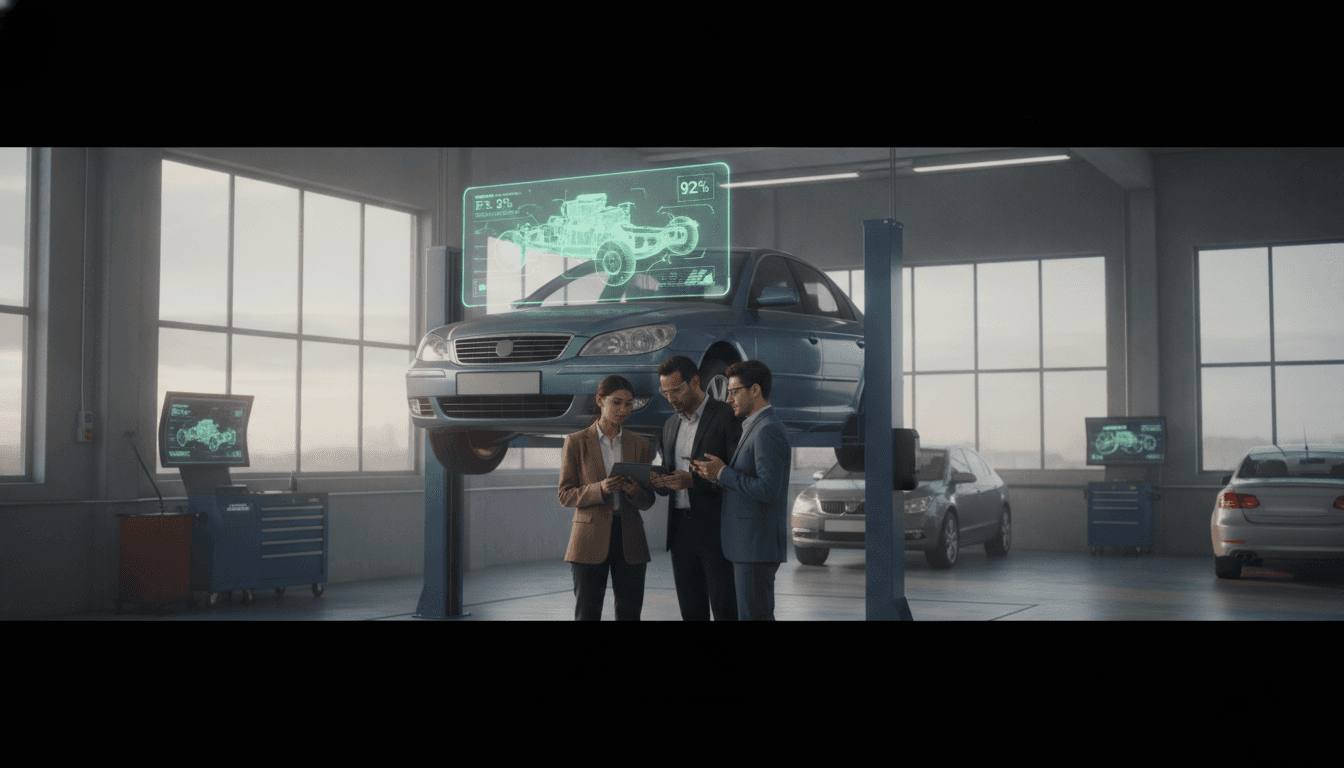
Used Car Future Health Inspection: Combining AI & Mechanics for Smarter Buying
Learn why a traditional PPI isn't enough. Our guide explains how a used car future health inspection AI complements a mechanic for a complete reliability forecast.