
Outsmart AI Used Car Scams 2026: Your Digital Inspection Guide
Don't fall for AI used car scams in 2026. Learn to spot fake listings, cloned dealerships, and deepfake videos with our advanced digital inspection guide.
AI-assisted research and drafting; factual sources are linked in the article.

You’re scrolling at 11 PM. Marketplace, Craigslist, Autotrader—it doesn’t matter. After weeks of searching, you finally see it. The perfect 2019 Toyota RAV4. Low miles, clean interior, and priced at $24,500—just low enough to be an amazing deal, but not so low it’s an obvious scam. Your heart rate picks up.
Then the doubt creeps in. That sinking feeling in your gut. Is this real? Am I about to waste a Saturday and $50 in gas driving to see a car that doesn’t exist? Or worse, a car that’s hiding a money-pit secret?
If that anxiety feels familiar, you’re not paranoid. You’re paying attention. The game has changed. The old tricks of curbstoning and title washing are still out there, but the real threat now comes from sophisticated AI used car scams 2026 that are designed to fool even savvy buyers. Your old playbook is obsolete.
The New Battlefield: Why Your Old Scam-Spotting Playbook Is Useless
For years, the advice was simple: get a CarFax, check the VIN, and look for mismatched paint in person. That advice is now dangerously outdated. Scammers are leveraging artificial intelligence to create fraud so convincing it sails past basic checks.
Here’s what you’re up against in 2026:
- Hyper-Realistic Fake Listings: Scammers use generative AI to create images of cars that don't exist. They can take a photo of a real, damaged car and digitally repair it, erase dents, and even change the color. The lighting is perfect, the reflections are clean, and the car looks immaculate. It’s a ghost car, built from pixels, designed to steal your deposit.
- Deepfake Video Walkarounds: You ask the seller for a video to prove the car is real. They send you a one-minute clip, walking around the car, pointing out features. The problem? The video is a deepfake. The seller's face, their voice, even the license plate—all generated by AI. They seem trustworthy and transparent, but you're talking to a machine.
- Cloned Dealerships & Synthetic Sellers: AI can create a perfect copy of a legitimate local dealership's website in minutes, complete with fake inventory at tempting prices. They'll even create AI-generated salesperson profiles on social media to build trust before asking for a remote “refundable” deposit.
Let’s be blunt: a clean vehicle history report doesn’t help you if the car in the photos isn’t real. Your eyes can deceive you. You need to fight AI with AI.
Case Study: The “Immaculate” 2018 Subaru Forester That Hid a $5,000 Secret
We recently analyzed a listing for a 2018 Subaru Forester with 55,000 miles. The price was fair, the VIN came back clean, and the seller provided a spotless CarFax. To the average buyer, it was a green light.
But the photos felt… too perfect.
Running the images through an AI analysis told a different story. Our system flagged a few things a human eye would almost certainly miss:
- Micro-Texture Mismatch: The paint on the passenger-side front fender had a subtle “orange peel” texture, while the rest of the car had a smooth, factory finish. This is a dead giveaway of a repaint.
- Inconsistent Panel Gaps: The gap between that same fender and the hood was 1.5mm wider than the gap on the driver's side. It’s a tiny difference, but it screams that the fender has been removed or replaced.
- Overspray on Trim: A microscopic analysis of the image revealed a faint mist of the car's 'Horizon Blue Pearl' paint on the black plastic trim near the wheel well—a classic sign of a rushed body shop job that didn’t properly mask the car.
The truth? The owner had been in a fender-bender, paid a cheap body shop cash to fix it to avoid an insurance claim, and kept the title clean. The undisclosed damage, which included a potentially compromised crumple zone, instantly knocked $4,000 off the car’s real value. The first time you hit a pothole, that shoddy repair could lead to suspension issues costing thousands. A clean CarFax told a lie that the pixels in the photo exposed as the truth.
Your Advanced Digital Inspection Toolkit: Should I Even Message This Seller?
Before you invest any emotional energy or time, you need to run a digital pre-inspection. This is the new, non-negotiable first step to separate real opportunities from dangerous scams.
Step 1: The 60-Second Photo Autopsy
Your first move isn't to message the seller; it's to interrogate their photos. Scammers get lazy and reuse images. A simple reverse image search using Google Lens can instantly tell you if the photos were stolen from another listing, a car blog, or a stock photo website. If the image of that “privately owned” 2020 Honda CR-V also shows up on a dealership site in another state from two years ago, you have your answer. Run.
Step 2: Uncover the VIN's Buried History
A clean CarFax is a starting point, not a conclusion. Remember the Forester? The VIN was clean. You need to look for clues the report doesn't show. For example, some models have well-known, expensive issues that aren't recalls.
- The Ford “Death Rattle”: The 3.5L EcoBoost V6 in many 2011-2016 F-150s can develop a timing chain issue around 100,000 miles. It starts as a rattle on cold starts and ends with a $2,500-$3,500 repair bill. A seller’s photos won't show this, but knowing this risk changes how you view a listing for an F-150 with 95k miles.
- Nissan’s CVT Nightmare: The continuously variable transmission (CVT) in models like the 2013-2017 Altima and Sentra has a notoriously high failure rate. A replacement can cost $3,000 to $5,000. Many owners sell right before the warranty expires or when they first feel it shuddering. A clean history report won't mention the ticking time bomb in the transmission.
Step 3: The “Prove It’s Real” Challenge
If a listing passes the initial digital sniff test, it's time to engage the seller—but do it like a detective. Don't ask “Is it still available?” Ask for something specific and time-sensitive that a scammer with a library of stolen photos can’t produce.
- The Specific Video Request: “Could you send me a quick video of you starting the car? I’d love to hear the engine turn over. And could you just show the lit-up dashboard at the end?” A scammer with a deepfake video is unlikely to have this specific clip.
- The Live-Action Photo: “I know it’s a weird ask, but could you send me a picture of the owner’s manual on the passenger seat next to today’s newspaper?” This is simple for a real owner and impossible for a scammer in another country.
If they hesitate, give excuses, or get defensive, you’re done. You’ve just saved yourself from a potential scam without leaving your couch.
The Decision: When to Walk Away vs. When to Drive Out
Navigating the used car market has become an exercise in digital forensics. The threat of AI used car scams 2026 is real, but it doesn't mean you have to give up.
It simply means the decision-making process has changed. The question is no longer just “Is this a good car?” It’s “Is this a real car?”
Walk away immediately if:
- The seller refuses a specific, time-stamped photo or video request.
- A reverse image search shows the photos are from another source.
- They pressure you for a deposit before you’ve seen the car, often with a sob story about having other buyers lined up.
Proceed with cautious optimism if:
- The photos pass an AI scan for hidden repairs like paint mismatches or bad panel gaps.
- The seller willingly provides the custom photos or videos you request.
- The car’s known issues (like the Ford timing chain or Nissan CVT) don’t align with the mileage, or there's proof of preventative maintenance.
Your goal isn’t to find a car with zero flaws. It’s to find a car whose flaws you know about and can accept. The most expensive mistake isn't buying a car with a few scratches; it's buying a car with a few secrets.
Your First Line of Defense is 60 Seconds Away
Feeling that knot in your stomach about a listing that seems too good to be true? Before you message the seller, schedule a test drive, or drive across town, take 60 seconds. Trust your gut, but verify with data.
CarScanAI flags stock photos, screenshots from other listings, and catches paint mismatches and panel gap issues that human eyes miss. A quick scan of the listing's photos is your first, best defense against the growing wave of sophisticated AI used car scams 2026. It's the cheapest insurance you can buy against a multi-thousand-dollar mistake.
Have a listing in mind?
Run a free first-pass check using the year, make, model, mileage, and asking price. No account required.
Check a Listing FreeRelated Articles
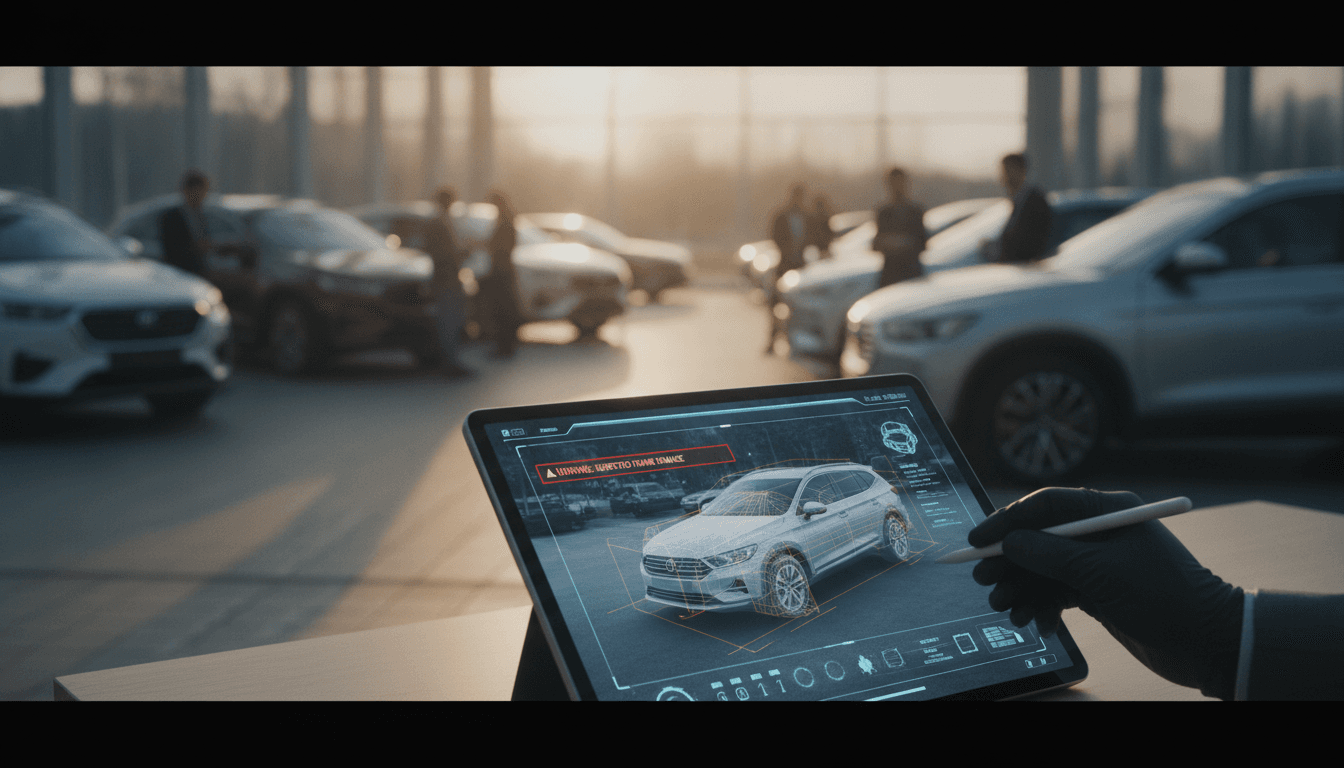
Digital Pre-Screening Used Car Listings: Find Hidden Issues in 2026
Master digital pre-screening for used car listings to find hidden issues in 2026. This guide covers photo analysis, VHRs, and seller vetting to avoid bad buys.
Don't Get Duped: How to Spot Undisclosed Accident & Flood Damage in Used Cars (2026 Guide)
Feeling anxious about a used car deal? This 2026 guide helps you spot hidden accident and flood damage before you make a costly mistake. Don't get duped.
Used Car Future Health Inspection: Combining AI & Mechanics for Smarter Buying
Learn why a traditional PPI isn't enough. Our guide explains how a used car future health inspection AI complements a mechanic for a complete reliability forecast.