
Exposing Used Car Seller Lies: Your Guide to AI Inspection in 2026
Learn about exposing used car seller lies with our guide to AI inspection in 2026. See how AI tools analyze photos and data to spot scams before you buy.
AI-assisted research and drafting; factual sources are linked in the article.

Should you trust online used car listings in 2026 without independent, AI-powered verification? The short answer is no. In today's digital marketplace, where AI can generate convincing fake listings and sophisticated sellers can easily misrepresent a vehicle's true condition, relying solely on descriptions and photos provided by the seller is a significant risk. Empowering yourself with AI-driven tools like CarScanAI before you even consider an in-person viewing is a crucial step to avoid costly mistakes and save valuable time.
The used car market of 2026 presents both unprecedented opportunities and heightened risks for buyers. While online platforms offer a vast selection, the ease with which sellers can create compelling but deceptive listings has never been greater. From subtle photo manipulation to outright fabrication of vehicle details, buyers face an uphill battle in discerning truth from fiction. This is where AI-powered verification becomes an indispensable ally, offering a critical layer of scrutiny that goes beyond superficial appearances.
The Evolving Landscape of Used Car Deception in 2026
The traditional challenges of buying a used car—such as undisclosed accidents, odometer fraud, and hidden mechanical issues—have been exacerbated by advancements in artificial intelligence. Today, potential buyers must contend with:
- Sophisticated Image Manipulation: AI tools can seamlessly alter photos to hide rust, dents, or other damage, making a distressed vehicle appear pristine. What looks like a minor scratch in one photo might be a major structural issue carefully cropped out of another.
- AI-Generated Fake Listings: The ability of generative AI to produce realistic text and images means that entirely fabricated listings, complete with convincing backstories and even AI-generated seller profiles, are a growing concern. These listings can be designed to lure unsuspecting buyers, potentially leading to scams or wasting time on non-existent vehicles.
- Selective Disclosure: Sellers may strategically omit crucial details or provide vague descriptions that conceal significant problems. While a vehicle history report provides vital information, its effectiveness is limited to what has been officially reported. Accidents not reported to insurance or police, or repairs done by independent shops not linked to central databases, might never appear on these reports.
- Digital Forgery: The creation of fake maintenance records or inspection certificates is becoming increasingly sophisticated, making it harder for buyers to verify a vehicle's service history.
These tactics make it challenging for even experienced buyers to accurately assess a vehicle's condition, maintenance, and history based solely on an online listing.
How CarScanAI Exposes Used Car Seller Lies
CarScanAI is designed to be your first line of defense against these evolving deceptive practices. By leveraging advanced AI and machine learning algorithms, CarScanAI processes the data and images from online listings to identify inconsistencies, red flags, and potential misrepresentations that a human eye might miss. This AI-powered inspection acts as a crucial pre-screening tool, helping you make an informed decision before committing to a physical viewing or an expensive mechanic's inspection.
Here’s how CarScanAI assists in exposing used car seller lies in 2026:
1. Advanced Photo Analysis and Discrepancy Detection
CarScanAI's core strength lies in its ability to analyze submitted photos with unparalleled precision. It doesn't just "look" at a photo; it dissects it:
- Damage and Imperfection Identification: Our AI is trained on vast datasets of vehicle images, enabling it to recognize common types of damage like dents, scratches, paint inconsistencies, and rust, even if attempts have been made to obscure them. For example, if a seller provides multiple photos, CarScanAI can compare them to detect if damage visible in one angle has been cleverly cropped out or digitally smoothed in another.
- Consistency Checks Across Images: The system cross-references details across all provided images. If a specific area of the car appears pristine in one shot but suspiciously out of focus or absent in another, CarScanAI flags this inconsistency for your review. A sudden change in lighting conditions or camera angle might hide a significant flaw.
- Evidence of Poor Repairs or Modifications: While it cannot see under the hood, CarScanAI can often detect tell-tale signs of visible, poorly executed bodywork or aftermarket modifications that could indicate undisclosed accidents or mechanical issues. Visible overspray, uneven panel gaps, or mismatched paint textures are all indicators the AI can highlight.
2. Cross-Referencing Listing Details with External Data
Beyond images, CarScanAI intelligently scrutinizes the textual information in the listing, cross-referencing it with authoritative external databases:
- Vehicle History Report Integration: CarScanAI integrates with established vehicle history reports (like CarFax or AutoCheck, where available and permissions allow) to compare the seller's claims against documented history. If a seller states "no accidents" but the vehicle history report shows a prior incident, CarScanAI will highlight this discrepancy.
- VIN Decoding and Specification Verification: By decoding the Vehicle Identification Number (VIN), CarScanAI verifies the car's make, model, year, trim, and original specifications. If the listing claims features or a model year that doesn't align with the VIN, it's a significant red flag.
- Recall Status and Safety Alerts: CarScanAI checks against current recall databases maintained by agencies like the National Highway Traffic Safety Administration (NHTSA). An active, unrepaired recall could indicate a potential safety issue that the seller may not have disclosed.
- Mileage Anomaly Detection: While odometer fraud can be sophisticated, CarScanAI can identify significant discrepancies in reported mileage when cross-referenced with previous registration data or service records, where available and included in the data feed.
- Common Deception Tactics Database: CarScanAI's algorithms are continuously updated with insights into emerging seller deception tactics, including patterns of language used in fraudulent listings and common ways sellers attempt to mask vehicle flaws.
3. Identifying AI-Generated Red Flags
Given the rise of AI-generated content, CarScanAI is also equipped to detect patterns that suggest a listing itself might be partly or entirely fabricated by AI. This could include:
- Unnatural language patterns in the description.
- Photos that appear too perfect or show subtle digital artifacts consistent with AI generation.
- Inconsistencies between different elements of the listing (e.g., photo backgrounds that don't match the purported location).
What CarScanAI Can and Cannot Do
It's important to understand the capabilities and limitations of any AI-assisted screening tool.
CarScanAI can:
- Identify visible inconsistencies in listing photos and textual descriptions.
- Flag discrepancies between seller claims and available vehicle history data.
- Detect potential signs of hidden damage that are visibly suggested in photos, such as unusual paint texture or misaligned panels.
- Highlight omissions or vague language that might indicate a seller is being evasive.
- Provide a preliminary risk assessment of a listing, helping you decide whether to proceed with further investigation.
CarScanAI cannot:
- Diagnose hidden mechanical problems or issues that are not externally visible.
- Guarantee the complete accident history or structural integrity of a vehicle, as history reports are only as complete as the data reported.
- Certify the authenticity of every document or record provided by a seller.
- Determine the exact market value or pricing fairness of a vehicle.
- Replace an in-person, hands-on inspection by a qualified mechanic. It is a screening tool, not a substitute for professional human expertise.
Hypothetical Example: A Listing Under Scrutiny
Imagine a hypothetical online listing for a 2018 sedan. The description boasts "excellent condition, no accidents, meticulously maintained." The photos show a shiny exterior and a clean interior.
When processed by CarScanAI:
- Photo Analysis: CarScanAI might detect a subtle inconsistency in the reflection on the driver's side door in one photo, suggesting a slight ripple or repaint that doesn't match the rest of the car. It might also notice that the tire tread depth appears lower than expected for the stated mileage and the "meticulously maintained" claim.
- Data Cross-Reference: The AI then checks the VIN. While the seller claims "no accidents," CarScanAI, through its integration with vehicle history data, finds a record of a minor collision report filed two years ago, which resulted in a fender repair. It also flags an active, unrepaired recall for the vehicle's airbag system that the seller failed to mention.
- Red Flag Synthesis: CarScanAI presents these findings to you: photographic evidence of a potential repaint, low tire tread, an undisclosed accident in the history report, and an active recall. This comprehensive red-flag report immediately tells you that the seller's claims of "excellent condition, no accidents, meticulously maintained" are highly questionable, allowing you to avoid a wasted trip or a risky purchase.
This hypothetical scenario illustrates how CarScanAI helps you cut through the noise and deception, enabling you to ask pointed questions or simply move on to a more transparent listing.
Your Decision Framework: Leveraging AI for a Safer Purchase
In 2026, the decision of whether to pursue an online used car listing should follow a clear framework. Do not arrange a viewing until you have confidence in the listing's veracity.
- Initial Scan: Identify promising listings that meet your basic criteria.
- Run a CarScanAI Listing Check: Input the listing details and photos into CarScanAI. This is your critical first verification step.
- Review CarScanAI's Report:
- Green Flags: If CarScanAI finds minimal inconsistencies and confirms key details, proceed to the next step with increased confidence.
- Yellow Flags: If CarScanAI highlights minor inconsistencies (e.g., a small paint chip not mentioned, but otherwise clean history), formulate specific questions for the seller. These might be acceptable risks depending on your tolerance.
- Red Flags: If CarScanAI identifies significant discrepancies (e.g., undisclosed accident, mileage inconsistency, signs of major cosmetic repair, or potential AI-generated content), do not proceed with the listing. The risk is too high.
- Seller Communication (If Yellow Flags): If you decide to proceed despite yellow flags, engage the seller with the specific questions CarScanAI's report raised. Pay attention to their response. Evasiveness or defensiveness is a warning sign.
- Obtain a Comprehensive Vehicle History Report: Always purchase a full vehicle history report from a reputable provider (e.g., CarFax, AutoCheck). Remember, CarScanAI may integrate some of this data, but a dedicated report is essential for deeper dives into reported incidents.
- In-Person Inspection (If AI and Reports are Positive): Only after the CarScanAI report and vehicle history report align positively should you arrange an in-person viewing. During this viewing, visually verify the points flagged by CarScanAI (e.g., check for subtle paint differences, tire condition).
- Pre-Purchase Inspection (PPI) by a Qualified Mechanic: This is the absolute final and most critical step. A CarScanAI inspection is a powerful screening tool, but it cannot replace the expertise of a human mechanic who can physically inspect the vehicle, including lifting it, checking under the hood, and conducting diagnostic tests. A mechanic can uncover hidden mechanical issues, structural damage, or other problems that neither an AI nor a history report can detect. The FTC advises getting an independent inspection.
By integrating CarScanAI into your used car buying process, you shift from passively accepting seller claims to proactively verifying them. This empowers you to make data-driven decisions, saving you from wasted time, emotional frustration, and potentially thousands of dollars on a misrepresented vehicle.
Before you spend time arranging a viewing, run a free listing check at https://carscanai.net/listing-check.
Sources
- "Common Used Car Scams and How to Avoid Them." Federal Trade Commission (FTC), https://www.consumer.ftc.gov/articles/buying-used-car. (General advice on scams, not necessarily 2026 specific but foundational).
- "Buying a Used Car." Federal Trade Commission (FTC), https://www.consumer.ftc.gov/articles/buying-used-car.
- "Vehicle History Reports: What They Tell You (And What They Don't)." Consumer Reports, https://www.consumerreports.org/cars/vehicle-history-reports/vehicle-history-reports-what-they-tell-you-and-what-they-dont-a1293348123/.
- "AI for Vehicle Damage Detection and Assessment." Capgemini Engineering Insights, https://www.capgemini.com/insights/expert-perspectives/ai-for-vehicle-damage-detection-and-assessment/. (Illustrates AI capabilities in damage detection for insurance, applicable to CarScanAI's photo analysis).
- "Used Car Safety Checklist." National Highway Traffic Safety Administration (NHTSA), https://www.nhtsa.gov/press-releases/nhtsa-used-car-safety-checklist.
- "The Used Car Rule: A Guide for Dealers." Federal Trade Commission (FTC), https://www.ftc.gov/business-guidance/resources/used-car-rule-guide-dealers. (While for dealers, it sets a standard for consumer protection and disclosure expectations in the market).
Have a listing in mind?
Run a free first-pass check using the year, make, model, mileage, and asking price. No account required.
Check a Listing FreeRelated Articles
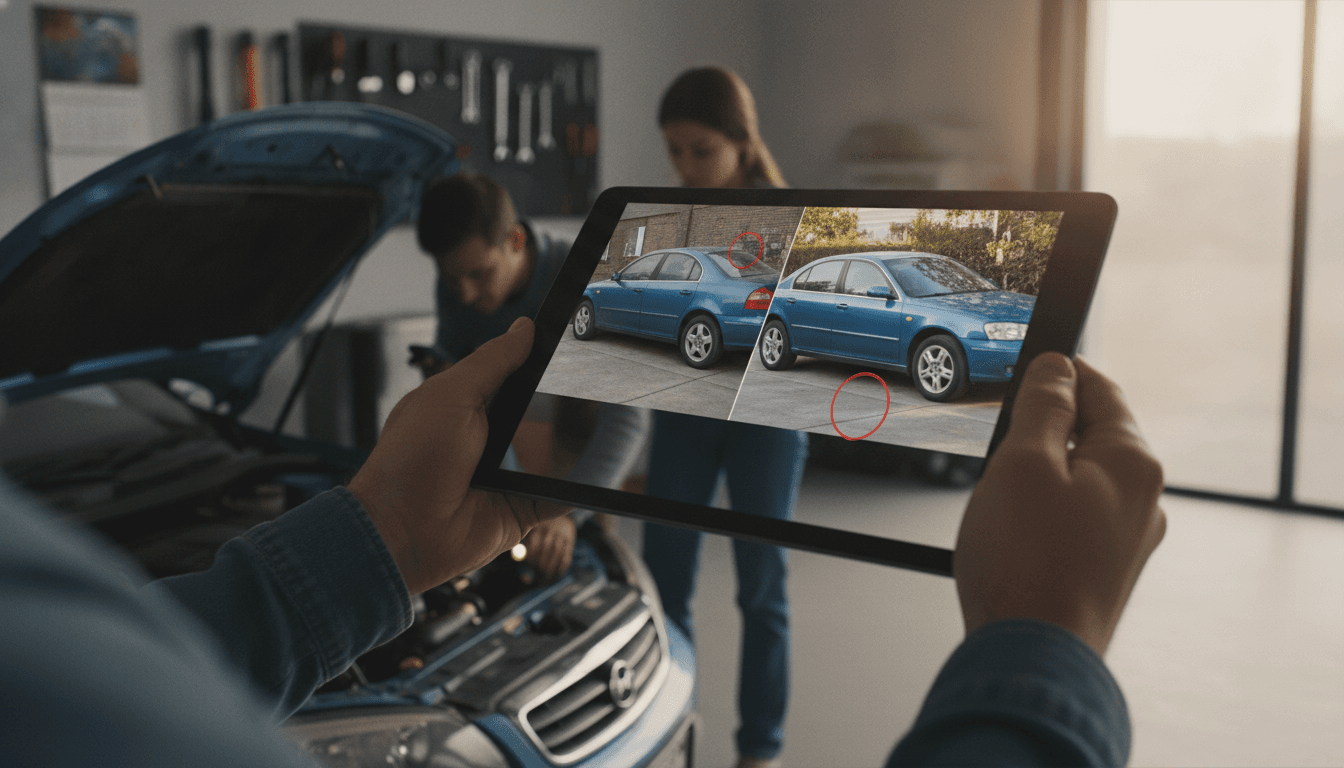
How to Spot Used Car Listing Discrepancies in Photos (2026 Guide)
Our 2026 guide helps you spot used car listing discrepancies in photos. Learn to identify hidden damage, digital edits, and inconsistencies before you buy.
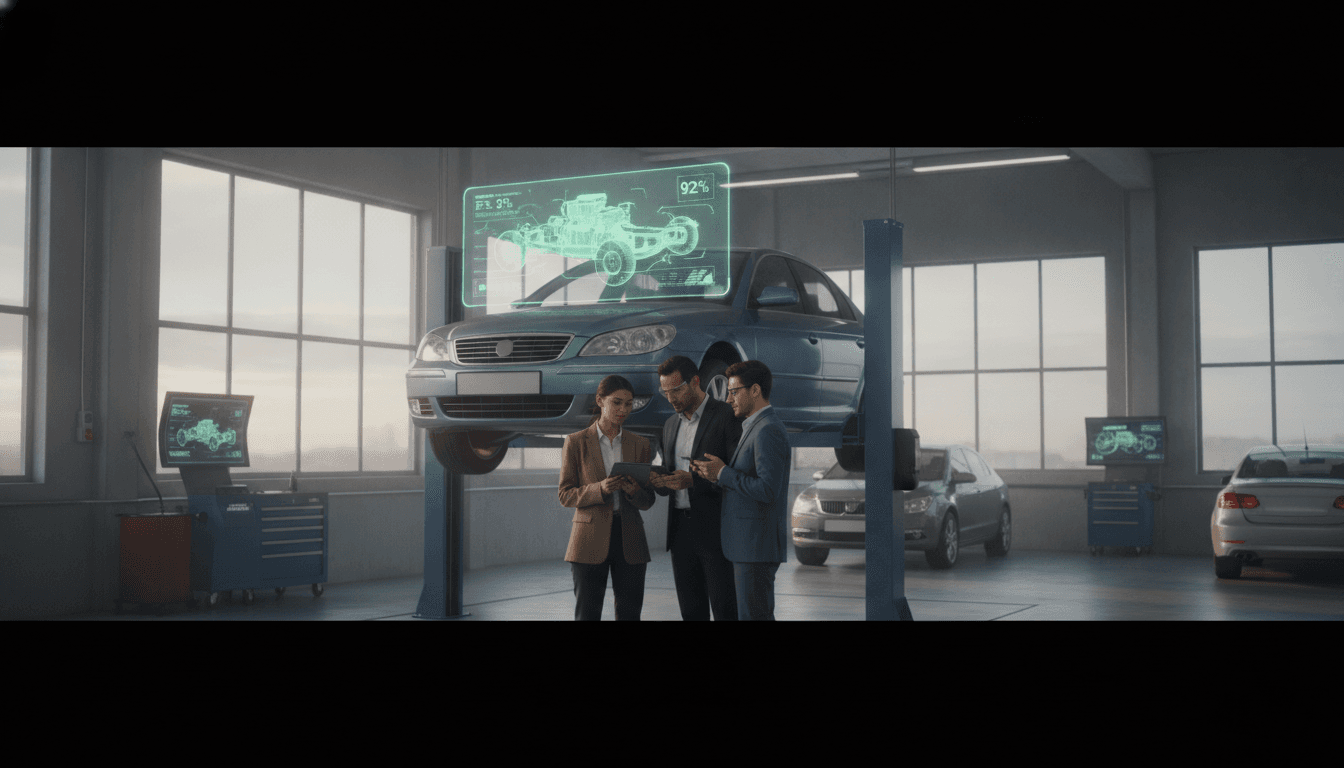
Used Car Future Health Inspection: Combining AI & Mechanics for Smarter Buying
Learn why a traditional PPI isn't enough. Our guide explains how a used car future health inspection AI complements a mechanic for a complete reliability forecast.
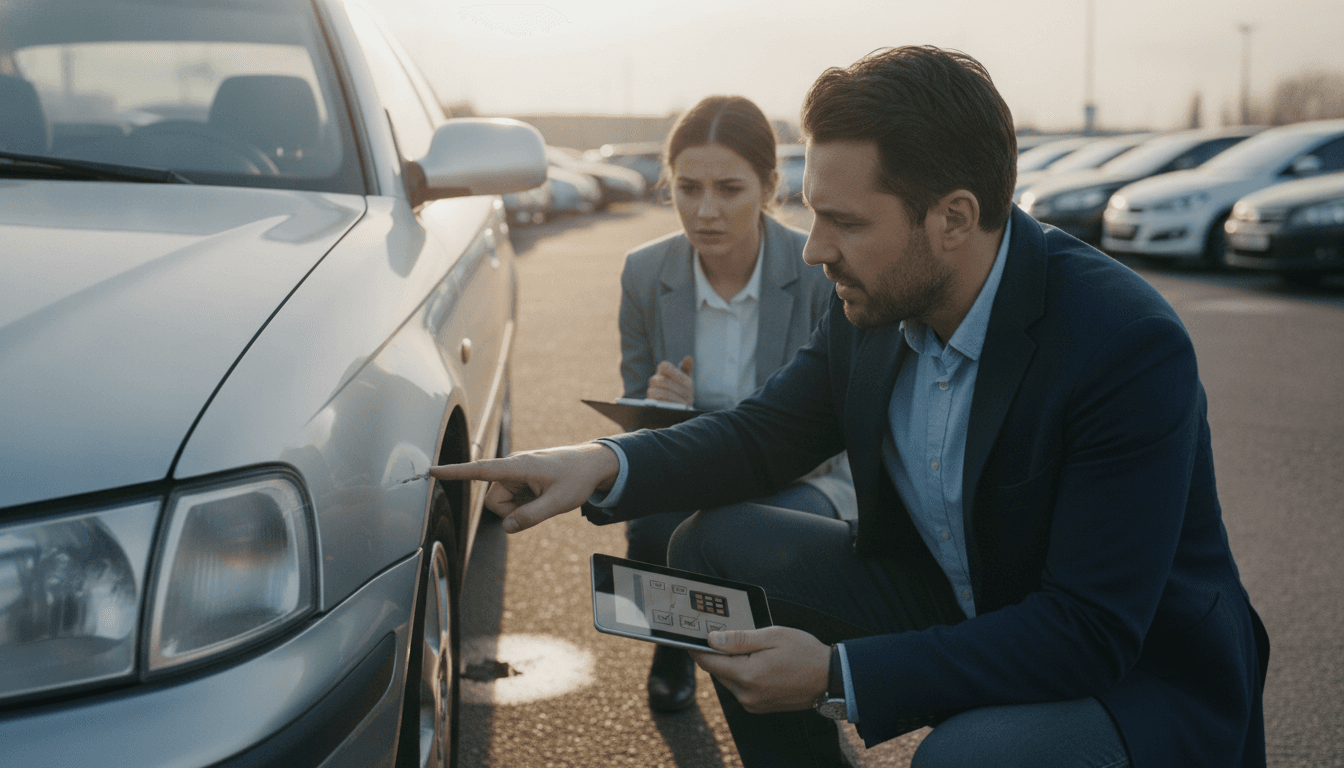
Used Car Visible Wear and Tear: A Guide to Estimating Future Costs
Don't get surprised by repair bills. Learn how to decode used car visible wear and tear from photos to accurately estimate future costs before you buy.