
Used Car Future Health Inspection: Combining AI & Mechanics for Smarter Buying
Learn why a traditional PPI isn't enough. Our guide explains how a used car future health inspection AI complements a mechanic for a complete reliability forecast.
AI-assisted research and drafting; factual sources are linked in the article.
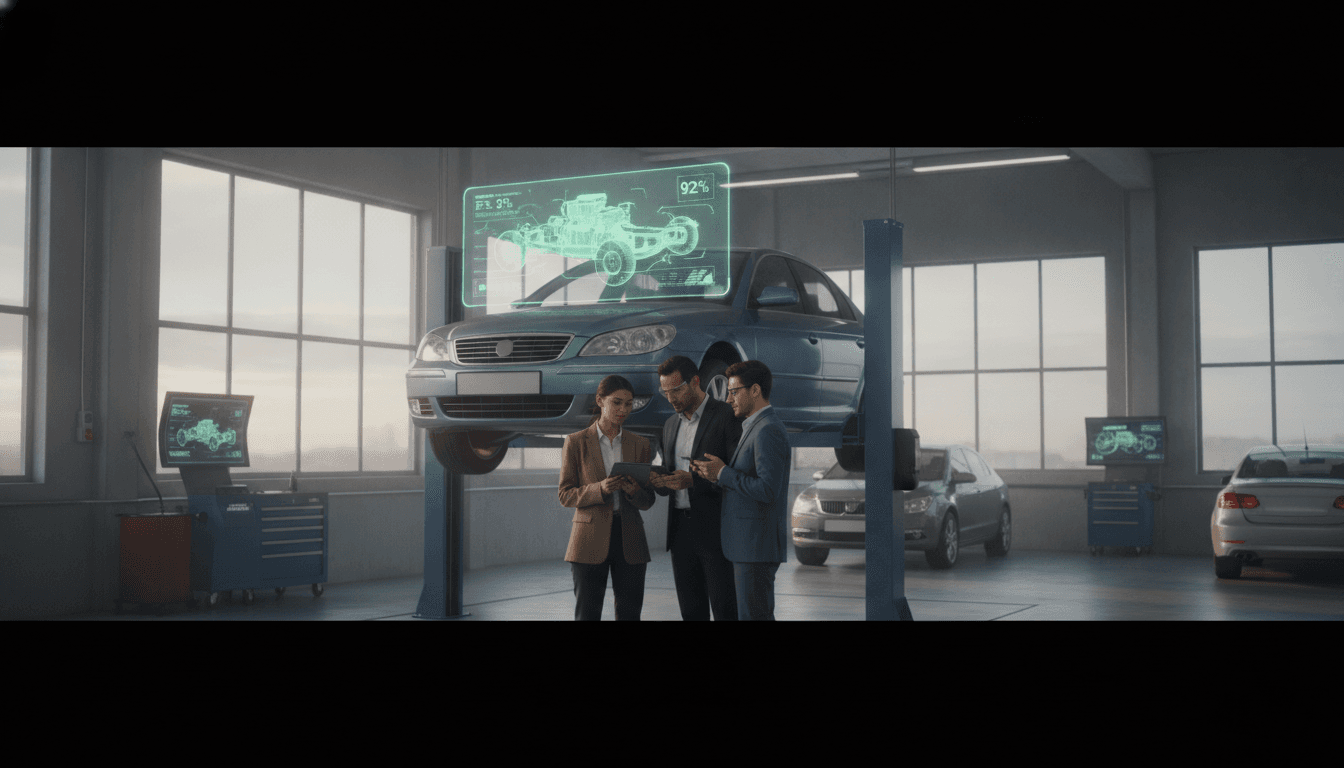
Should you rely solely on a traditional mechanic's pre-purchase inspection (PPI) when buying a used car, or should you incorporate AI-assisted screening for a more comprehensive understanding of its future health? The short answer is clear: for truly informed used car decisions in 2026, you should absolutely supplement a traditional PPI with AI-assisted screening. While a mechanic provides an invaluable snapshot of a car's present condition, AI offers deeper, predictive insights into its long-term reliability and potential future repair costs that conventional methods simply cannot uncover.
Buying a used car is inherently stressful. You're balancing budget, features, and the ever-present fear of inheriting someone else's problems. The traditional pre-purchase inspection by a trusted mechanic has long been the gold standard for mitigating this risk. A mechanic can identify existing issues, worn components, and immediate safety concerns. However, in an era of increasingly complex vehicles and vast digital data, relying solely on a wrench-and-eyeball assessment leaves significant blind spots regarding a vehicle's likely future.
The Unseen Cracks: Where Traditional PPIs Fall Short
A conventional pre-purchase inspection is like a medical check-up: it tells you a lot about your health today. What it often can't do is accurately predict your health tomorrow, especially without access to your complete medical history and population-wide health trends. The same limitations apply to used cars.
A Snapshot, Not a Forecast
Traditional PPIs are, by nature, focused on the present. A mechanic meticulously checks components for visible wear, leaks, strange noises, and dashboard warning lights. They might test drive the vehicle, hook up a basic diagnostic scanner for current trouble codes, and inspect the undercarriage. This process is crucial for identifying immediate problems like failing brakes, a leaky transmission, or frame damage from an undisclosed accident.
However, this snapshot approach inherently limits foresight. A component might be showing early signs of wear that aren't yet severe enough to trigger a diagnostic code or manifest as an obvious symptom. Without historical context or an understanding of common failure patterns for that specific make and model, it's difficult for a mechanic to gauge how quickly a minor issue might escalate into a major, costly repair. The inspection is limited to what is physically observable at that moment.
The Silent Killers: Intermittent and Developing Issues
Some of the most frustrating and expensive used car problems are those that are intermittent or slowly developing. An electrical glitch that only appears on cold mornings, a transmission shudder that occurs only after 30 minutes of highway driving, or a sensor that is starting to fail but hasn't fully given up the ghost – these are incredibly difficult, if not impossible, for a mechanic to diagnose during a typical hour-long PPI. They simply don't have the time or conditions to replicate every potential driving scenario.
Moreover, certain design flaws or known weaknesses in specific vehicle models might not manifest until higher mileages or after a particular period of ownership. A traditional PPI, without access to comprehensive historical data, has no way of flagging these inherent vulnerabilities before they become your problem.
Beyond the Lift: What Data Doesn't Get Checked
Even the most thorough mechanic is limited by the information available to them during the inspection. They can check the vehicle's maintenance records if provided by the seller, but these are often incomplete or fabricated. What they typically cannot access or analyze efficiently includes:
- Comprehensive Recall and Technical Service Bulletin (TSB) History: While some major recalls are easy to find, understanding the full scope of TSBs—which are essentially manufacturer alerts about common problems and recommended fixes—requires extensive database access and analysis. A car might have several unresolved TSBs that could lead to future issues.
- Widespread Owner Complaint Data: Public databases like those maintained by the National Highway Traffic Safety Administration (NHTSA) contain thousands of owner complaints detailing recurring problems for specific models. This collective wisdom offers invaluable insights into potential future headaches.
- Mileage Discrepancies and Title History Flags: While a CarFax or AutoCheck report covers some of this, sophisticated AI can cross-reference multiple data points to detect more subtle attempts at mileage fraud or title washing that might escape standard checks.
- Common Failure Points and Repair Trends: Every car model has its quirks and common failure points. A traditional mechanic relies on their personal experience, which is extensive but cannot encompass the entire universe of vehicle data.
The AI Advantage: Peering into a Car's Future Health
This is where AI-assisted screening services, like CarScanAI, fundamentally change the game for used car shoppers. By leveraging massive datasets and advanced algorithms, AI can provide a layer of predictive insight that complements and enhances the physical inspection. It's about moving "beyond the wrench" to a holistic understanding of a vehicle's statistical likelihood of future reliability and cost.
Data-Driven Predictions, Not Guesses
AI's power lies in its ability to aggregate, process, and find patterns within vast quantities of automotive data that no human, or even a team of humans, could practically analyze in real-time. This data includes:
- NHTSA Complaint Databases: AI can sift through millions of owner complaints, identifying specific patterns of failure for particular makes, models, and years. For instance, if owners of a 2018 sedan consistently report transmission issues around 80,000 miles, AI can flag this as a high-risk factor for a similar vehicle currently at 70,000 miles.
- Technical Service Bulletins (TSBs): Manufacturers issue TSBs to dealers about common issues and repair procedures. AI can identify unresolved TSBs that apply to a specific VIN, indicating potential latent problems.
- Recall Data: While standard checks cover major recalls, AI ensures every relevant recall, including less publicized ones, is identified and whether it has been addressed.
- Maintenance and Service Records (where available): When digital service records are accessible, AI can analyze them for inconsistencies, recurring repairs that suggest a deeper problem, or missed scheduled maintenance crucial for longevity.
- Market-Specific and Auction Data: AI can contextualize a vehicle's health by comparing it to similar vehicles on the market, noting trends in wear, mileage, and reported issues across a vast pool of cars.
By analyzing these diverse data points, AI doesn't just tell you what's wrong now; it offers probabilities and trends about what could go wrong in the future, providing an estimated "future health score" that a mechanic cannot.
Uncovering Hidden Histories and Red Flags
Beyond just mechanical predictions, AI excels at identifying inconsistencies and red flags in a vehicle's history that could signal deeper problems or fraud:
- Mileage Discrepancy Detection: AI can compare reported odometer readings from various sources over time (e.g., state inspections, service records, auction listings) to detect subtle rollbacks or data entry errors that could indicate tampering.
- Title History Anomalies: While standard reports cover major title issues, AI can analyze patterns in title transfers, lien histories, and state-to-state movements that might suggest attempts at "title washing" or hiding a vehicle's true condition.
- Undisclosed Accident Indicators: While CarScanAI does not claim photo analysis can find hidden mechanical problems or guarantee accident history, its analysis of listing data can sometimes reveal red flags in a vehicle's description or history that may warrant further investigation regarding past damage, even if it wasn't reported to insurance. This provides a prompt for further due diligence.
- Common Failure Point Highlighting: For a hypothetical 2017 SUV model known for premature catalytic converter failure, an AI system could specifically flag this as a potential future expense, even if the current PPI shows the component is functioning. This insight allows a buyer to factor in potential repair costs or negotiate accordingly.
A Broader Spectrum of Risk Assessment
Ultimately, AI provides a more holistic risk assessment. It moves beyond just "pass/fail" on current components to offer insights into:
- Anticipated Repair Costs: Based on known model vulnerabilities and common failure rates, AI can estimate potential future repair costs, helping you budget for ownership beyond the purchase price.
- Reliability Compared to Peers: How does this specific vehicle (given its mileage, history, and model year) stack up against thousands of similar vehicles in terms of projected reliability? AI can provide this comparative insight.
- Owner Satisfaction Trends: By analyzing sentiment from owner reviews and forums, AI can give a glimpse into common frustrations or delights associated with owning that particular vehicle, adding another dimension to future ownership experience.
A Hybrid Approach: Combining the Best of Both Worlds
The most informed used car purchase decision in 2026 will involve a hybrid approach, combining the meticulous hands-on inspection of a qualified mechanic with the data-driven predictive power of AI. Neither completely replaces the other; they are complementary tools in your arsenal.
Think of it this way:
- Start with AI-assisted screening. Before you even schedule a viewing or a PPI, use a service like CarScanAI to run a free listing check. This initial screen can quickly identify major red flags, common model-specific issues, and historical inconsistencies that might make a particular vehicle a "no-go" right from the start. It saves you time and money by filtering out problematic listings early.
- Review the AI report thoroughly. This report provides a "future health" prognosis, highlighting common weaknesses, potential costly repairs, and historical data points that warrant attention.
- If the AI report is promising, then proceed with a traditional PPI. Once the AI has confirmed the vehicle's digital footprint looks good, arrange for a qualified mechanic to perform a hands-on inspection. This is where immediate safety issues, leaks, current wear and tear, and the car's actual present condition are verified.
- Share the AI insights with your mechanic. Provide your mechanic with the CarScanAI report. This information can guide their inspection, allowing them to focus extra attention on known weak points for that model or to verify specific historical flags uncovered by the AI. This collaboration ensures a far more targeted and effective physical inspection.
- Make an informed decision. With both the present-day assessment from your mechanic and the future-focused predictions from AI, you have the most comprehensive picture possible of the used car's true condition and likely long-term reliability.
It's crucial to remember that CarScanAI is an AI-assisted screening tool. It excels at analyzing vast digital data to provide predictive insights and highlight potential risks. It does not replace the critical in-person inspection by a qualified mechanic, who can physically assess the vehicle's current mechanical condition and safety.
Your Decision Framework: Navigating the Used Car Market
To empower yourself in the used car buying process, adopt this modern, two-pronged approach:
- Initial Digital Scan (AI First): Before you invest time or money, run an AI-assisted listing check on any used car you're seriously considering. Look for immediate red flags, historical inconsistencies, and model-specific reliability concerns flagged by the AI.
- Physical Verification (Mechanic Second): If the AI report indicates a vehicle with good potential, schedule a comprehensive pre-purchase inspection with a trusted, certified mechanic. Be sure to provide them with the AI report to guide their focus.
- Holistic Assessment: Combine the mechanic's findings on the car's current state with the AI's predictive insights into its future health. This combined intelligence allows you to assess the full spectrum of risks and rewards.
- Negotiate and Decide: Use this comprehensive understanding to negotiate the price effectively or to walk away from a potential money pit. An informed buyer is a powerful buyer.
By embracing both the practical expertise of a mechanic and the analytical power of AI, you move beyond the limitations of traditional inspections. You gain not just a picture of the car as it is today, but a more reliable forecast of its journey down the road, saving you from unexpected repairs and buyer's remorse.
Sources
- National Highway Traffic Safety Administration (NHTSA). "Search for Recalls, Complaints, Investigations, & Service Bulletins." Accessed September 14, 2026. https://www.nhtsa.gov/
- Federal Trade Commission (FTC). "Buying a Used Car." Accessed September 14, 2026. https://consumer.ftc.gov/articles/buying-used-car
Ready to make a smarter used car purchase? Start by running a free listing check on your desired vehicle at https://carscanai.net/listing-check before arranging a viewing.
Have a listing in mind?
Run a free first-pass check using the year, make, model, mileage, and asking price. No account required.
Check a Listing FreeRelated Articles
How to Spot a $4,000 Mistake: Uncovering Hidden Wear and Tear in Used Cars
Don't get burned by a 'clean' used car. Learn the expert secrets for spotting hidden wear and tear in used cars before you ever pay a mechanic, saving you time and money.

Perfect Photos, Hidden Wrecks: Unmasking Professionally Concealed Car Damage in 2026
Is that online car listing too good to be true? We'll show you the subtle clues—from paint texture to hidden rust—so you can detect professionally hidden car damage photos and avoid a costly mistake.

The Silent Killers: 7 Hidden Used Car Problems Even Savvy Buyers Overlook (and How to Spot Them)
Don't get burned. We expose 7 hidden used car problems overlooked in a typical inspection that cost thousands. Learn to spot red flags before you buy.