
How to Spot a $4,000 Mistake: Uncovering Hidden Wear and Tear in Used Cars
Don't get burned by a 'clean' used car. Learn the expert secrets for spotting hidden wear and tear in used cars before you ever pay a mechanic, saving you time and money.
AI-assisted research and drafting; factual sources are linked in the article.
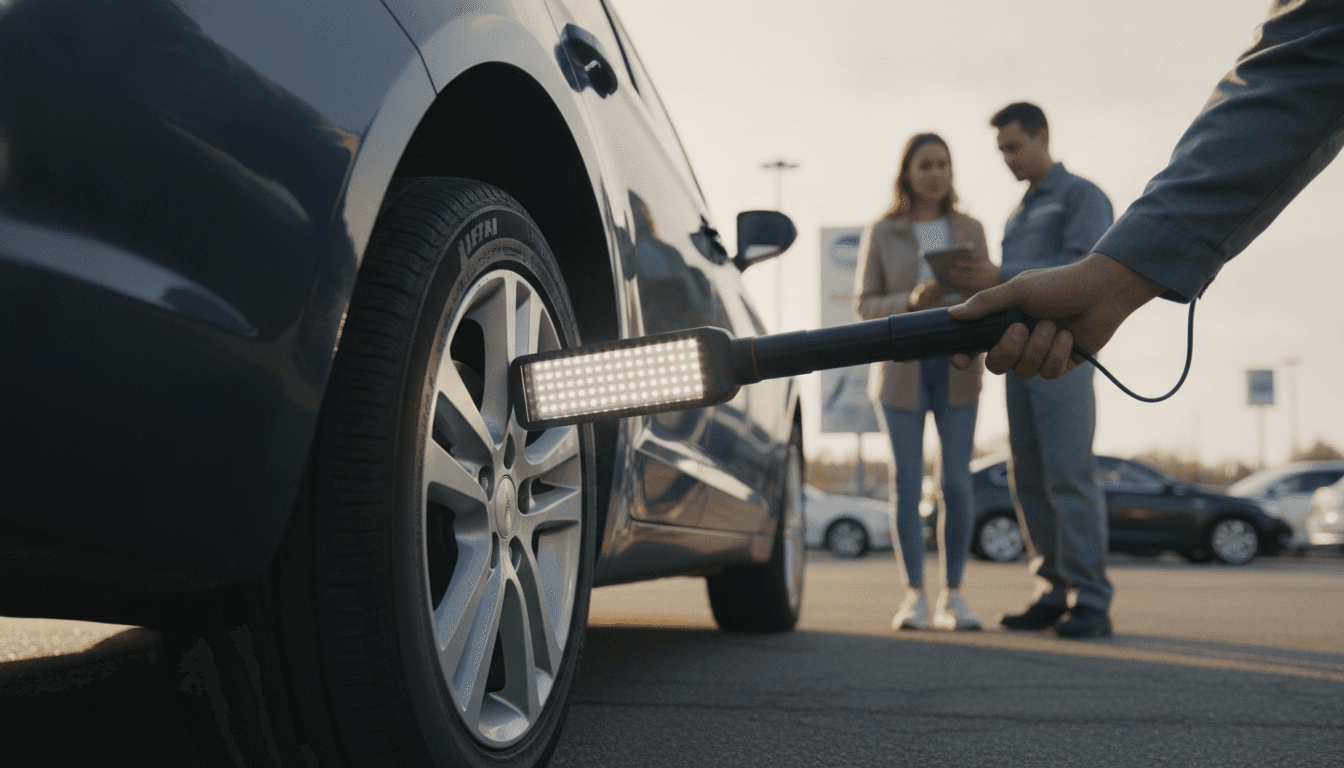
You found it. The perfect-looking 2016 Honda CR-V, right in your price range. The photos are clean, the seller seems nice, and you’re already imagining the road trips. So you pay a mechanic $150 for a pre-purchase inspection (PPI), feeling confident.
Then the call comes. "Yeah, so... it needs about $3,800 of work. The struts are shot, there's a slow oil leak from the timing cover, and it looks like it had some cheap bodywork done on the passenger side."
That sinking feeling in your stomach? It’s the feeling of being outsmarted by a bottle of Armor All and some well-angled photos. You just wasted $150 and a whole afternoon on a car that was a money pit from the start. We've all been there. The fear of buying someone else's expensive problems is real, and it’s the biggest stressor in the used car search.
This isn't another generic checklist. This is your defense against costly neglect. This is how you decide if a car is even worth your time, before you spend a dime on gas or an inspection fee.
The Dangerous Myth of the "Clean Car"
A shiny car and a healthy car are two very different things. A weekend and $50 in detailing supplies can make a neglected vehicle look pristine. Sellers aren't always malicious; sometimes they're just cleaning it up for sale. But that shine can hide a multitude of expensive sins.
Take the 2012-2016 Ford Focus. It's an affordable, decent-looking car. But many came with the DSP6 PowerShift automatic transmission, a unit so notoriously problematic that it sparked class-action lawsuits. A simple test-drive might not reveal the shuddering and hesitation that plague these cars, often leading to a $2,500+ clutch pack and control module replacement. The seller isn't going to mention that. Spotting hidden wear and tear used cars like this starts by knowing the common, expensive-to-fix issues before you even look at the car.
You have to look past the shine and learn to spot the clues of how the car was actually treated.
Your Pre-Screening Hit List: The $1,000+ Problems You Can Spot in 15 Minutes
Think of yourself as a detective. You're not trying to do a full mechanical diagnosis. You're looking for evidence of neglect, corner-cutting, and hidden damage. These are the red flags that tell you to walk away before calling a mechanic.
1. Tires: The $1,200 Story No One Tells
Tires are one of the most honest parts of a car. They tell you about the owner's budget and the car's underlying health. Don't just glance at the tread.
- Mismatched Brands: Are there three different brands of tires on the car? This is a huge red flag. It screams "I replaced the flat one with the absolute cheapest thing I could find." Good owners typically replace tires in pairs or full sets. A new set of quality tires for a common SUV like a Toyota RAV4 can easily cost $900 - $1,200.
- The Age Secret (DOT Code): Every tire has a four-digit date code. Look for "DOT" and find the sequence ending in four numbers. "3520" means the tire was made in the 35th week of 2020. Tires degrade over time, regardless of tread depth. If the tires are more than 6-7 years old, they are a safety hazard and need immediate replacement. This is an excellent bargaining point or a reason to walk away.
- Uneven Wear: Run your hand over the tread. Does it feel choppy or scalloped ("cupping")? Is the inside edge worn bald while the outside is fine? This isn't a tire problem; it's a symptom of a bigger issue. This points directly to failing suspension components like struts or shocks (an $800-$1,500 job) or chronic alignment problems.
2. Fluids: The Car's Lifeblood Reveals All
Checking the fluids is free and takes two minutes. If a seller hesitates to let you do this, run.
- Engine Oil: Pull the dipstick. Wipe it, re-insert, and pull it again. The oil should be a translucent brown or black. If it looks like a milky coffee, it means coolant is mixing with the oil—a classic sign of a blown head gasket. On a Subaru with the EJ25 engine (common in pre-2012 Outbacks and Foresters), that’s a $2,500+ repair, guaranteed.
- Transmission Fluid: On cars with a dipstick, check it. It should be bright red or pink and smell oily. If it's dark brown and smells burnt, the transmission has been overheated and neglected. A rebuild on a modern automatic transmission, like in a 2015 Nissan Rogue with its CVT, can easily top $4,000.
- Coolant: Look in the overflow reservoir. The fluid should be bright green, orange, or pink, and clear. If you see a sludgy, oily film on top, you're likely looking at that same head gasket or a leaking oil cooler. That's not a simple flush; that's major engine work.
3. The "Invisible" Accident: Spotting a Cover-Up
A clean CarFax report means nothing if an accident was never reported to insurance. Your eyes (and some clever tech) are the best defense against undisclosed bodywork.
- Check the Panel Gaps: Look at the spaces between the hood and fenders, or the trunk and the rear quarter panels. They should be tight and perfectly even all the way around. Slide your pinky finger along the gap; it should feel consistent. If the gap is wide enough for your thumb on one side and tight on the other, the car has been in a collision. Period.
- Look for Overspray: Open the doors and look at the black rubber weather stripping. Run your finger along the edges of the plastic trim under the hood. Feel for a gritty texture. That's paint overspray. A professional body shop masks these areas meticulously. A cheap repair shop doesn't bother.
- The Orange Peel Test: Factory paint jobs are almost perfectly smooth. Look at the car's reflection from an angle. Do you see a bumpy, wavy texture like the skin of an orange? That's a sign of a repaint. Bad bodywork can hide structural damage and lead to rust down the line.
We recently analyzed a listing for a 2019 Ford F-150. The photos were crisp, the price was fair, and the CarFax was clean. But our AI tool flagged a subtle difference in texture and light reflection on the front passenger door. It had that "orange peel" texture. This allowed the potential buyer to ask a specific question: "Was the passenger door ever repainted?" The seller admitted to a "parking lot scrape" fixed for cash. That knowledge saved the buyer a 2-hour drive and gave them the power to either walk away or negotiate a significant discount for the diminished value.
Trust Your Gut: The Senses Don't Lie
Beyond what you can see, pay attention to what you smell and hear. These are often the first signs of serious trouble.
-
The Smell Test:
- Sweet & Syrupy: That's coolant. A faint smell inside the cabin with the heat on points to a leaking heater core. This is often a $1,000+ job because the entire dashboard has to be removed for access.
- Musty & Damp: A mildew smell means a water leak. It could be a simple fix or a sign of a bad windshield seal or flood damage that has ruined sensitive electronics under the carpet.
- Burning Oil: A common culprit is a leaking valve cover gasket (a $400-$800 fix on many V6 engines), but it could be something more sinister.
-
The Sound Test (The Cold Start is Key):
- Ask the seller not to start the car before you get there. A cold engine tells the most truth.
- Listen for a loud rattling or chain-slapping sound for the first 2-3 seconds after it starts. This can be a sign of failing timing chain tensioners. On a 2011-2015 Kia Optima with the 2.4L GDI engine, this can be a precursor to catastrophic engine failure. It's a $1,500+ preventative repair.
Your Decision: When to Walk and When to Proceed
The goal of this initial check isn't to find a flawless car. It's to understand the car's story and its potential costs.
One issue, like 5-year-old tires, isn't a reason to run. It’s a $1,000 negotiating point.
But a pattern of neglect—mismatched old tires, dirty fluids, a weird smell, and evidence of a cheap repaint—tells you everything you need to know. That isn't a car you negotiate on. That's a car you thank the seller for their time and walk away from, saving your $150 inspection fee for a car that's actually worth it. The true challenge of spotting hidden wear and tear used cars is knowing which red flags signal a simple fix versus a systemic money pit.
Before you drive across town or book a mechanic, your first step should be screening the car from your couch. The photos in a listing hold more clues than you think.
Found a listing that looks promising? Before you even message the seller, run the photos through an AI analysis. For less than the cost of a coffee, CarScanAI can check for inconsistent panel gaps, paint texture anomalies, and other signs of hidden damage that human eyes often miss in low-res online photos. It's the smartest, cheapest first step to weed out the bad apples and focus your energy on cars that are actually worth your time.
Have a listing in mind?
Run a free first-pass check using the year, make, model, mileage, and asking price. No account required.
Check a Listing FreeRelated Articles
Used Car Future Health Inspection: Combining AI & Mechanics for Smarter Buying
Learn why a traditional PPI isn't enough. Our guide explains how a used car future health inspection AI complements a mechanic for a complete reliability forecast.

The Silent Killers: 7 Hidden Used Car Problems Even Savvy Buyers Overlook (and How to Spot Them)
Don't get burned. We expose 7 hidden used car problems overlooked in a typical inspection that cost thousands. Learn to spot red flags before you buy.

Used Car Visible Wear and Tear: A Guide to Estimating Future Costs
Don't get surprised by repair bills. Learn how to decode used car visible wear and tear from photos to accurately estimate future costs before you buy.