
Used Car Buying Confidence 2026: Your Guide to High Prices & Hidden Risks
Don't get burned in the 2026 used car market. Learn to spot hidden damage and mechanical risks before you even see the car. Boost your used car buying confidence for 2026.
AI-assisted research and drafting; factual sources are linked in the article.

You're Right to Be Anxious About Buying a Used Car in 2026
Let's be honest. Scrolling through used car listings right now feels like walking through a minefield. Prices are stubbornly high for cars with more miles than ever. Every listing claims to be "well-maintained" and "trouble-free," but your gut is screaming, "Am I about to make a $15,000 mistake?"
That anxiety is real, and it's justified. The old advice—check the CarFax, take a test drive, get an inspection—is dangerously outdated for the market we're in. The average age of a car on U.S. roads is now over 12 years old. This means the typical "affordable" car has seen a lot of life, and its history is often a complete mystery.
A clean vehicle history report doesn't mean a clean vehicle. It just means nothing was officially reported. The fender bender repaired with cash at a local body shop? The recurring issue the last owner got tired of fixing? Those are ghosts in the machine, and you're the one who will end up paying to exorcise them.
This guide isn't another generic checklist. It’s a new playbook designed to give you used car buying confidence in 2026. It's about helping you decide which cars are even worth your time, before you waste a Saturday driving across town to look at a ticking time bomb.
The $4,000 Question: Is This a "Good Deal" or a Financial Disaster?
The biggest fear is overpaying for a car that's hiding a catastrophic, wallet-draining failure. And in today's market, many popular and seemingly reliable models are right in the mileage-zone where these failures start to appear. A pre-purchase inspection (PPI) by a mechanic is great, but many of these issues are subtle until they fail completely. Your first line of defense is knowing what landmines to look for in specific models.
According to a 2023 Carfax study, more than half of all vehicles on the road have sustained damage in their history. The real problem is how much of that goes undocumented, masking deeper issues.
The Nissan CVT Gamble (Affecting 2012-2018 Altima, Sentra, Rogue, and others)
You find a 2017 Nissan Rogue with 95,000 miles. The price is right, it looks clean, and on the test drive, it seems okay—maybe a little hesitation when you accelerate, but you brush it off. This could be a $5,000 mistake.
- The Hidden Risk: Many Nissan models from this era use a Continuously Variable Transmission (CVT) from Jatco that has a well-documented history of premature failure, often between 80,000 and 120,000 miles.
- The Real Cost: When it fails, it's not a repair; it's a full replacement. You're looking at $3,500 to $5,000. On a car worth $10,000, that's a total loss. The subtle shudder or whine you might hear isn't a quirk; it's the transmission's death rattle.
Ford's EcoBoost Coolant Nightmare (Affecting 2013-2019 Escape, Fusion, Edge with 1.5L, 1.6L, 2.0L engines)
You're looking at a 2018 Ford Escape. It’s a perfect family SUV. The seller says they've kept up with maintenance. What they might not know, or won't tell you, is the fatal design flaw in the engine.
- The Hidden Risk: These EcoBoost engines have a tendency for coolant to leak into the cylinders, a problem known as "coolant intrusion." This leads to misfires, engine damage, and ultimately, complete failure.
- The Real Cost: This isn't a simple gasket fix. It requires a new long block. The bill from a mechanic shop will be $6,000 to $8,000. An owner might have been topping off the coolant for months, effectively hiding the symptom from a potential buyer during a 15-minute test drive.
The Hyundai/Kia Engine Lottery (Affecting many 2011-2019 models with the Theta II 2.4L and 2.0L Turbo engines)
A 2016 Kia Optima for a great price seems like a smart buy. It’s stylish and loaded with features. But you could be unknowingly buying into one of the largest engine defect scandals in recent history.
- The Hidden Risk: The Theta II engines are prone to catastrophic failure from bearing wear, which can cause the engine to seize without warning. While there was a massive class-action lawsuit and a lifetime warranty extension, dealing with it is a nightmare.
- The Real Cost: The repair itself might be covered, but you're facing weeks or months without a car, battles with dealerships for a loaner, and a vehicle with a permanent stain on its history that kills its resale value. It’s a headache that costs you time, stress, and future money.
Decoding the Photos: Your First Line of Defense
Before you worry about engine codes and transmission fluid, you can rule out a huge number of bad cars right from your couch. The seller's photos are your first piece of forensic evidence. Professional inspectors know that a car’s cosmetic condition tells the story of its life. Here's what to look for:
The "Orange Peel" Tell
Look closely at the reflections in the car's paint. Is the reflection sharp and clear like a mirror? Or is it bumpy and distorted, like the skin of an orange? That bumpy texture is called "orange peel," and it's a dead giveaway of a cheap, aftermarket paint job. Factory paint is almost perfectly smooth. If you see orange peel on a fender, door, or hood, that panel has been repainted. The immediate follow-up question is: Why?
Mismatched Panels and Uneven Gaps
Your car was assembled by robots to have precise, even gaps between all its body panels. Look at the space between the hood and the front fenders. Is the gap the same width on the left and the right? Is it consistent from front to back? Now look at the gaps around the doors and trunk. An uneven, wide, or pinched panel gap screams that the car has been in a collision and the parts weren't put back together perfectly. It’s one of the biggest red flags for hidden structural damage.
Case Study: The "Perfect" 2018 Ford Escape That Wasn't
We recently analyzed a listing for a 2018 Escape priced at $16,500—a fair price for a clean example. The photos looked flawless. The seller claimed a clean history. But our AI scan flagged two things a casual buyer would miss:
- Paint Texture Mismatch: There was a subtle orange peel texture on the driver's side front fender that wasn't present on the door next to it.
- Panel Gap Anomaly: The gap between that same fender and the hood was 2mm wider than the gap on the passenger side.
These two clues pointed to an unreported front-end collision. That's not just a cosmetic issue. On an Escape, a hit in that exact spot can easily damage the radiator or intercooler. A damaged cooling system is a major contributor to the EcoBoost engine failures. The buyer dodged a potential $7,000 engine replacement by spotting a 2mm difference in a photo.
The New Pre-Purchase Playbook for 2026
Confidence doesn't come from ignoring the risks; it comes from having a better process to identify them. Stop wasting your time and emotional energy on cars that are hiding secrets. Follow this modern workflow.
-
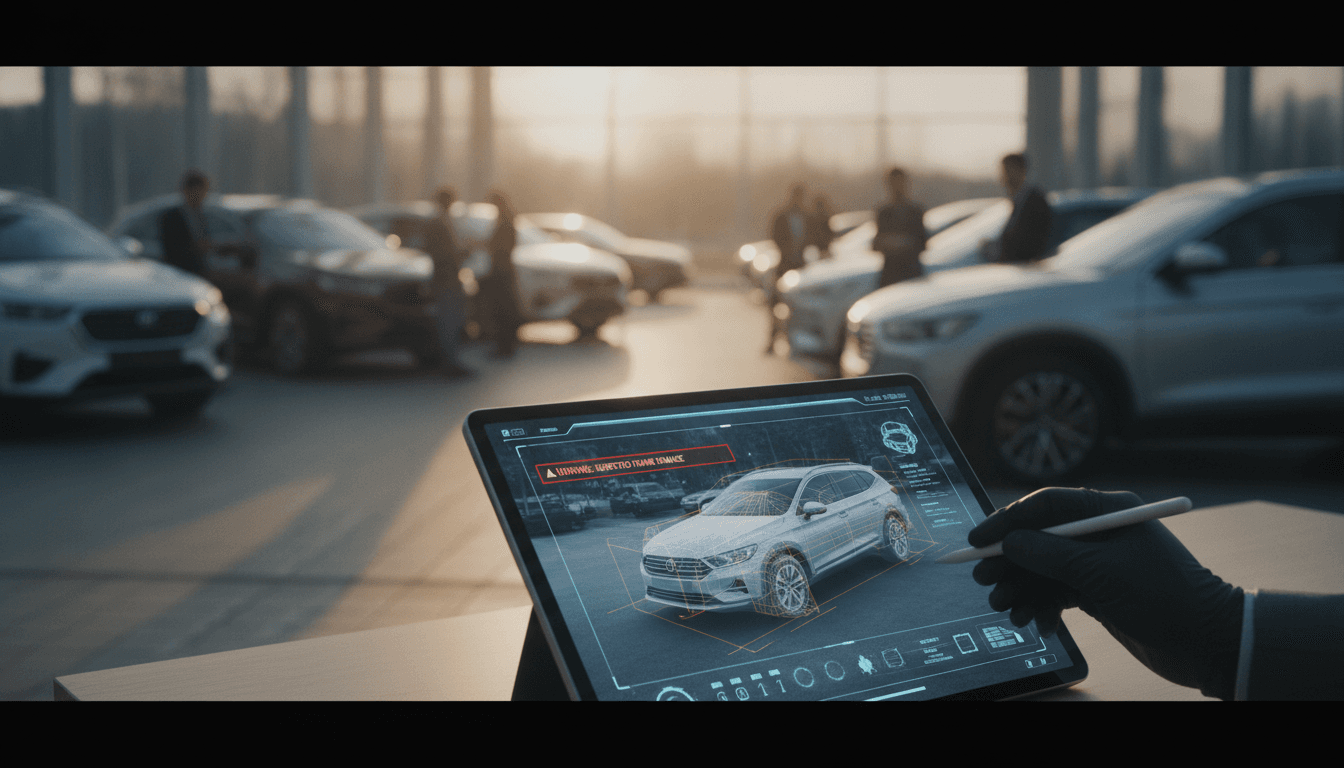
Step 1: The 60-Second Digital Inspection. Before you message a seller or get emotionally invested, put the listing photos to the test. Use a tool like CarScanAI to have an AI analyze the images for you. It instantly checks for paint texture inconsistencies, panel gap problems, hidden rust, and other tell-tale signs of past damage that the human eye can easily miss. This step costs less than the gas it would take to see the car and can save you hours of wasted time.
-
Step 2: The Intelligent Q&A. Armed with data, you can now ask surgically precise questions. Instead of the generic, "Has it been in any accidents?", you ask, "I noticed the reflection on the driver's door looks a little different from the fender. Has that door had any paintwork done?" This shows the seller you're not an easy mark and forces an honest answer. Their reaction will tell you everything you need to know.
-
Step 3: The Targeted Professional Inspection. The pre-purchase inspection is still a vital final step, but now it’s infinitely more powerful. Don't just ask your mechanic for a "general inspection." Tell them exactly what you're concerned about. "This is a 2017 Rogue with 105k miles. Can you please pay special attention to the CVT, listen for any whining sounds, and check the service records for a fluid change? I also have concerns about potential bodywork on the driver's side." This turns your mechanic from a detective into a surgeon, focusing their expertise where it matters most.
This process builds your used car buying confidence for 2026 by filtering out the bad apples before they ever get a chance to waste your time, money, and hope.
Your Next Smart Step
The market is tough, but you don't have to navigate it alone or unarmed. True confidence comes from seeing what others miss and making decisions based on data, not just a seller's word.
Before you drive across town to look at another listing, take a moment. Run the photos through a quick digital scan. For less than a cup of coffee, you can get an instant second opinion on panel gaps, paint quality, and other red flags hiding in plain sight. It’s the cheapest, fastest way to decide if a car is truly worth pursuing. Stop guessing and start analyzing. Your future self—and your bank account—will thank you.
Have a listing in mind?
Run a free first-pass check using the year, make, model, mileage, and asking price. No account required.
Check a Listing FreeRelated Articles

Navigating the 2026 Used Car Scam Lottery: How AI Reveals Hidden Risks
Feeling like you're playing the used car scam lottery in 2026? Learn how AI photo analysis uncovers hidden damage and risks before you buy, saving you from costly mistakes.

Spotting Used Car Photo Feature Discrepancies: A Buyer's Guide
Learn how to identify used car photo feature discrepancies. Our guide shows you how to cross-reference photos, use a VIN check, and leverage AI to avoid scams.
Digital Pre-Screening Used Car Listings: Find Hidden Issues in 2026
Master digital pre-screening for used car listings to find hidden issues in 2026. This guide covers photo analysis, VHRs, and seller vetting to avoid bad buys.